A Trail Tater cemetery chronicle
More than a cemetery
Burial Hill sits above Plymouth with the town and harbor below. Before it became a burying ground, the hill held the settlement's first fort. During our visit, history appeared in layers: defensive works, meetinghouse history, Mayflower families, Revolutionary patriots, missionary memorials, veterans, and nearly three centuries of changing gravestone art.
The best part was not checking names off a list. It was having seven members of the family walking the hill together—reading, noticing symbols, comparing stones, and discovering that the cemetery told a much larger story than any one monument could hold.
Sunday, August 2, 2026
Seven Trail Tater explorers
John Howland and Elizabeth Tilley
Winged skulls, ships, urns, and old slate
Before the cemetery
The first fort stood here
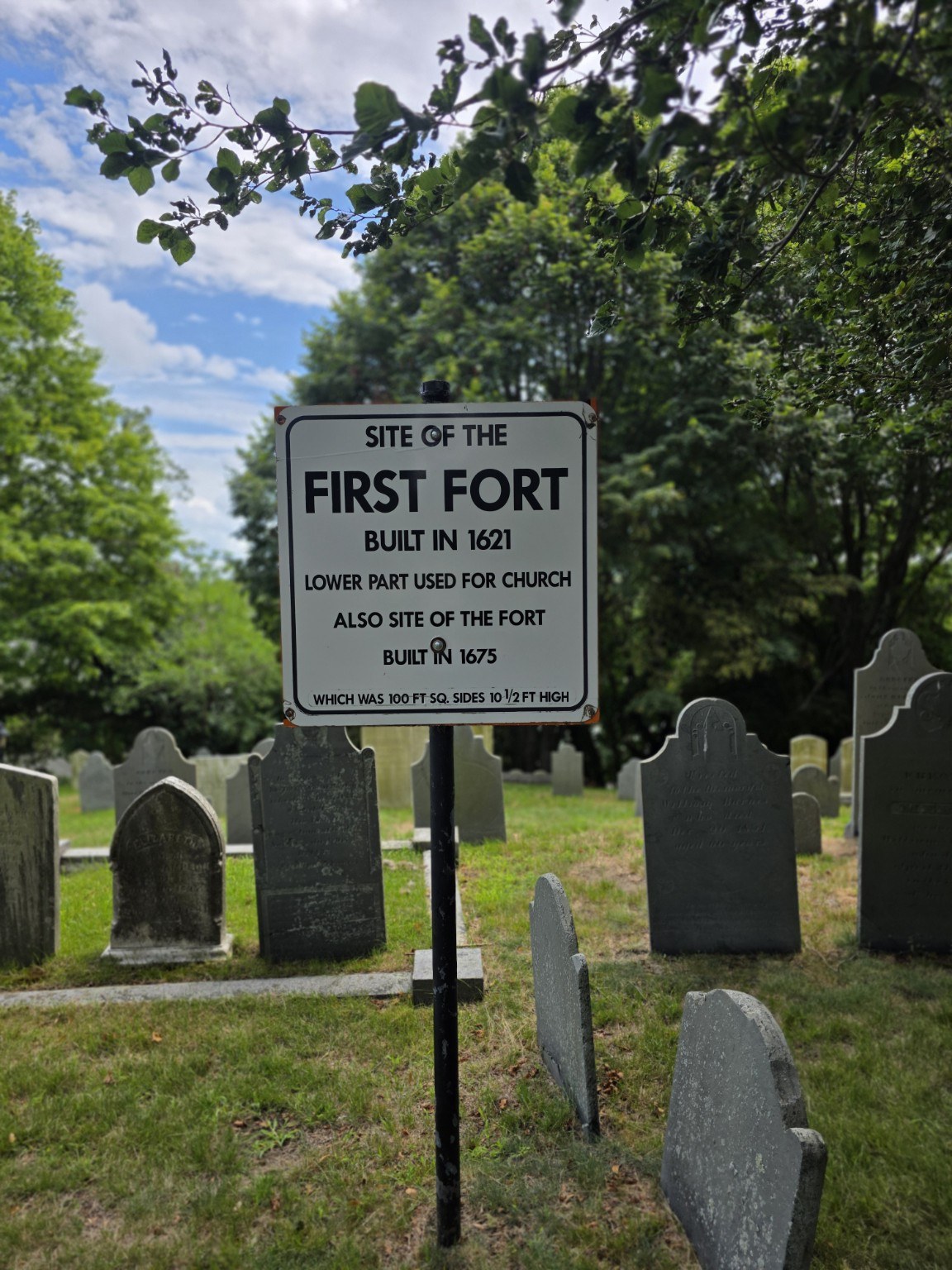
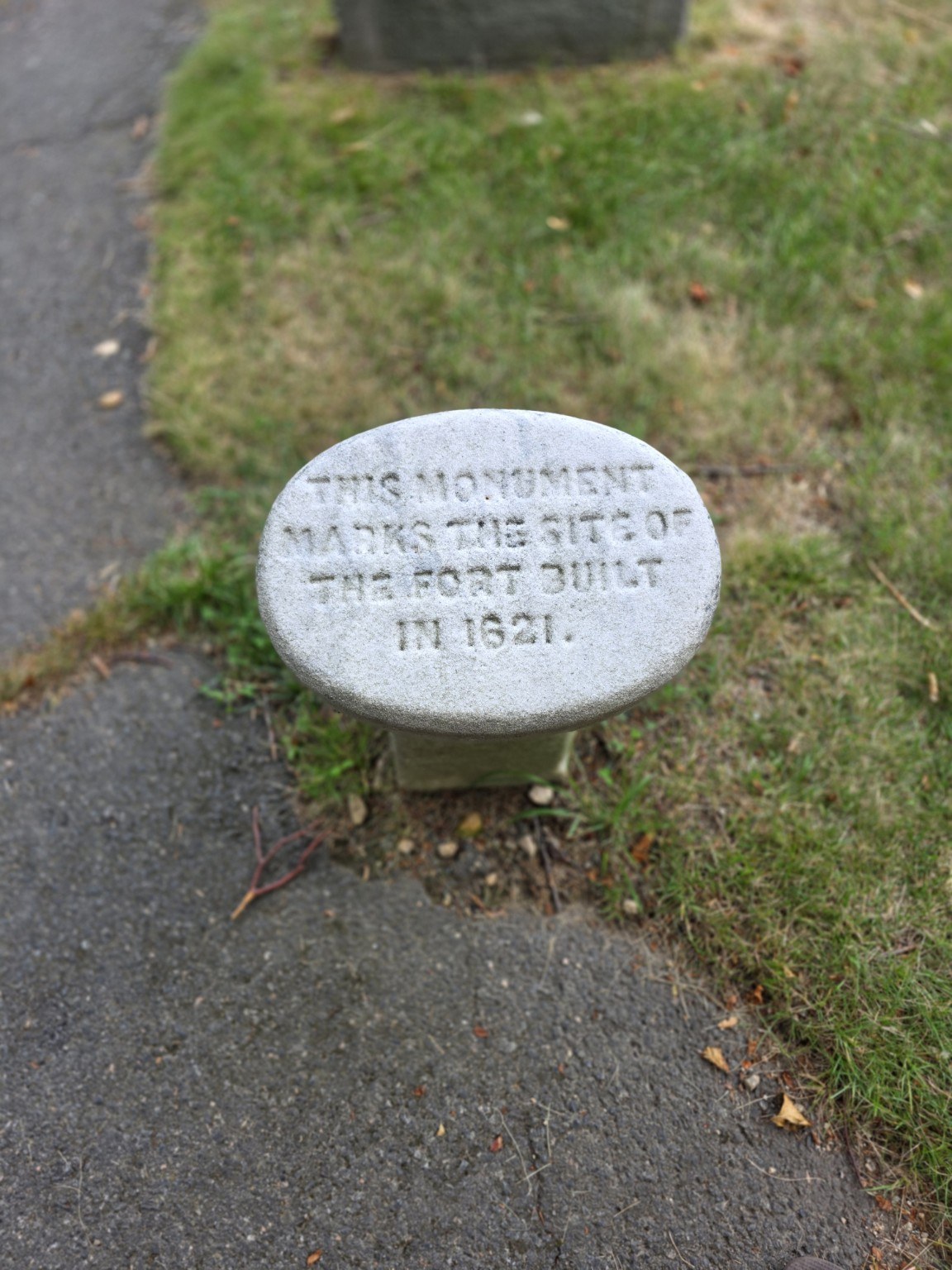
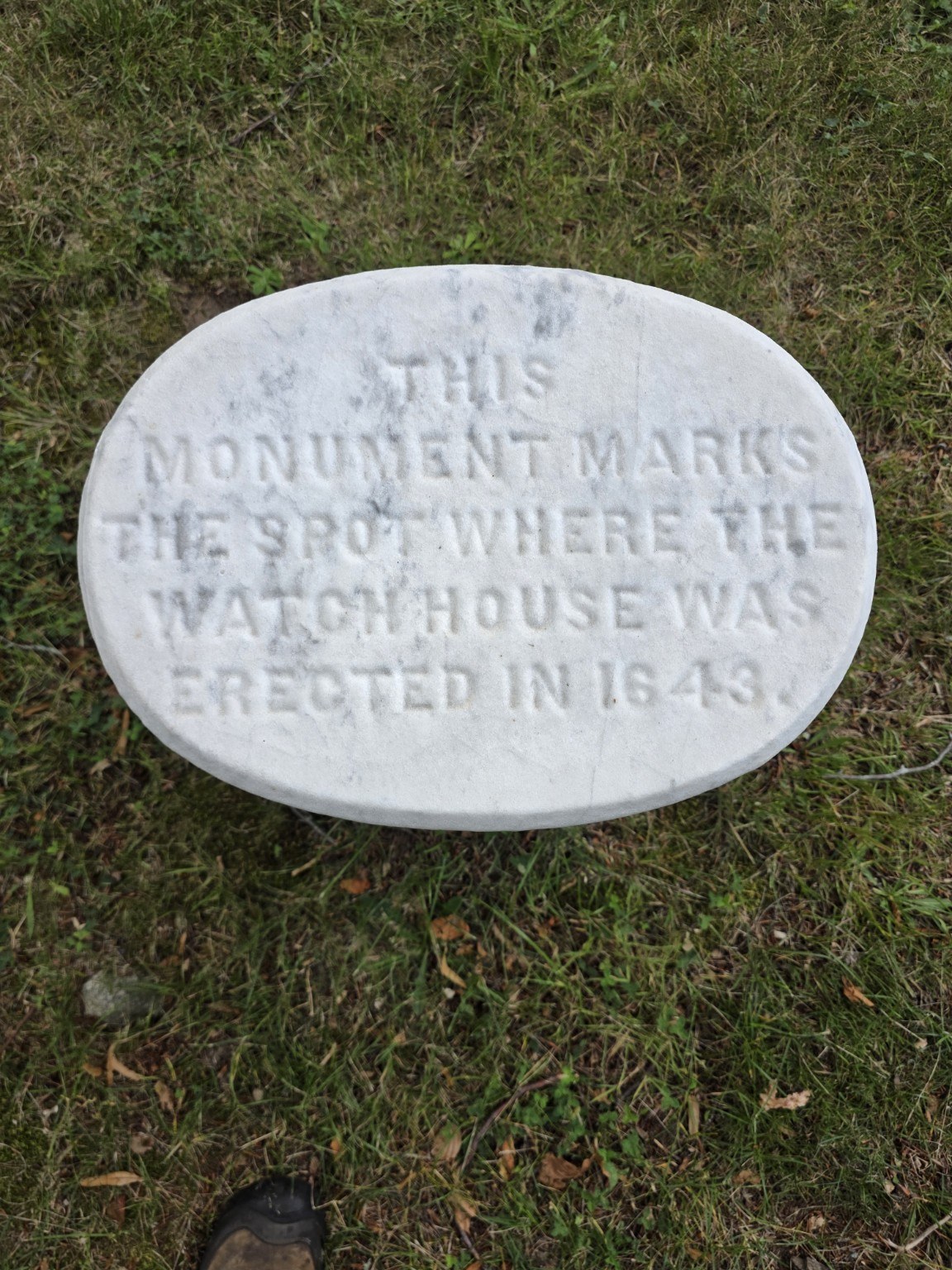
The hill was chosen for defense and visibility. A marker identifies the site of the fort built in 1621, whose lower part also served as a church. Another marker remembers the later watch house. From the slope, it is easy to understand why this ground mattered: the settlement and harbor spread below it.
Family history
John Howland, Elizabeth Tilley, and the next generation
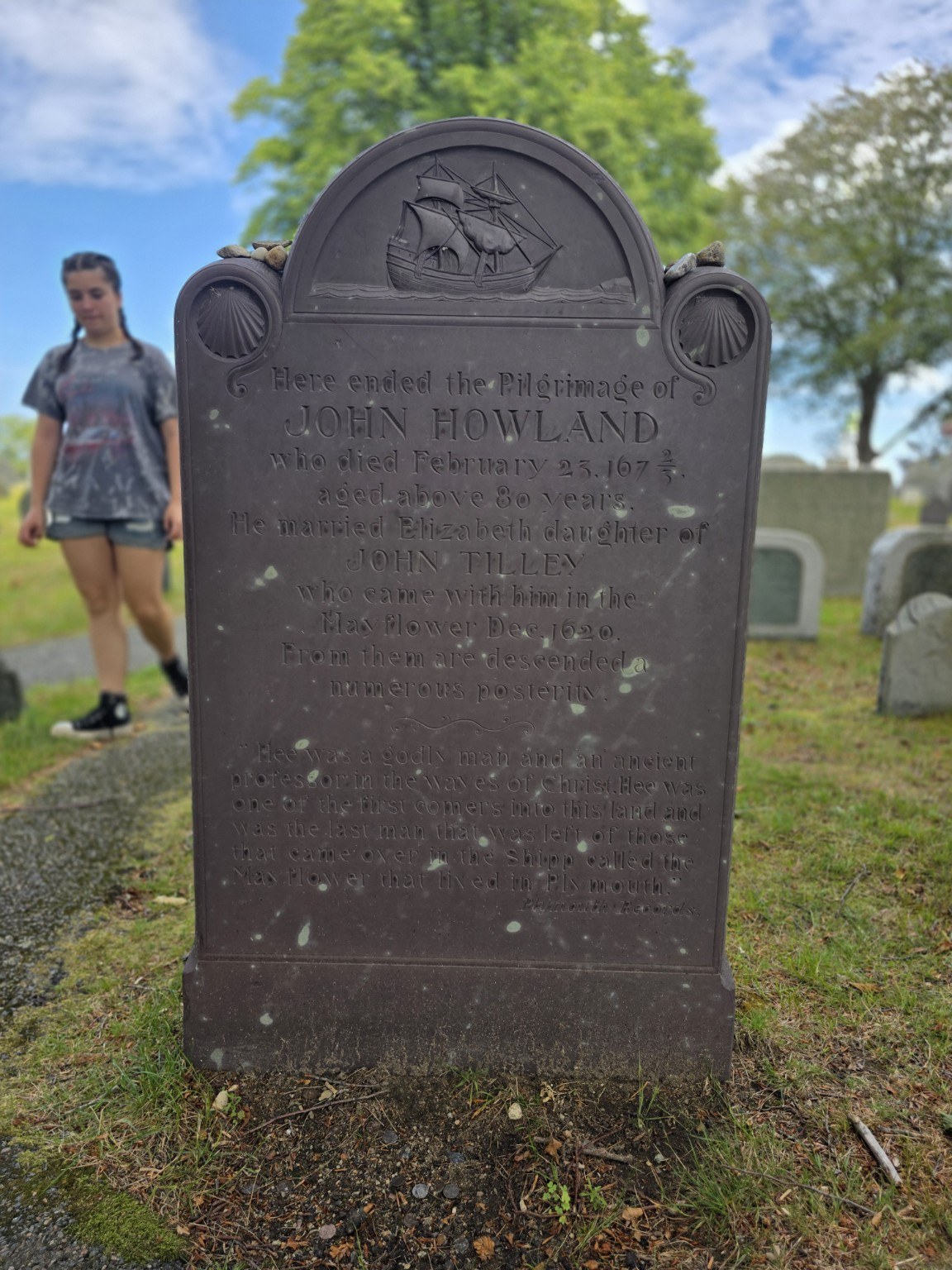
The memorial to John Howland was the emotional center of the visit. Its carved ship and opening words—“Here ended the Pilgrimage of John Howland”—connect his long life in Plymouth to the voyage that nearly ended when he was swept overboard.
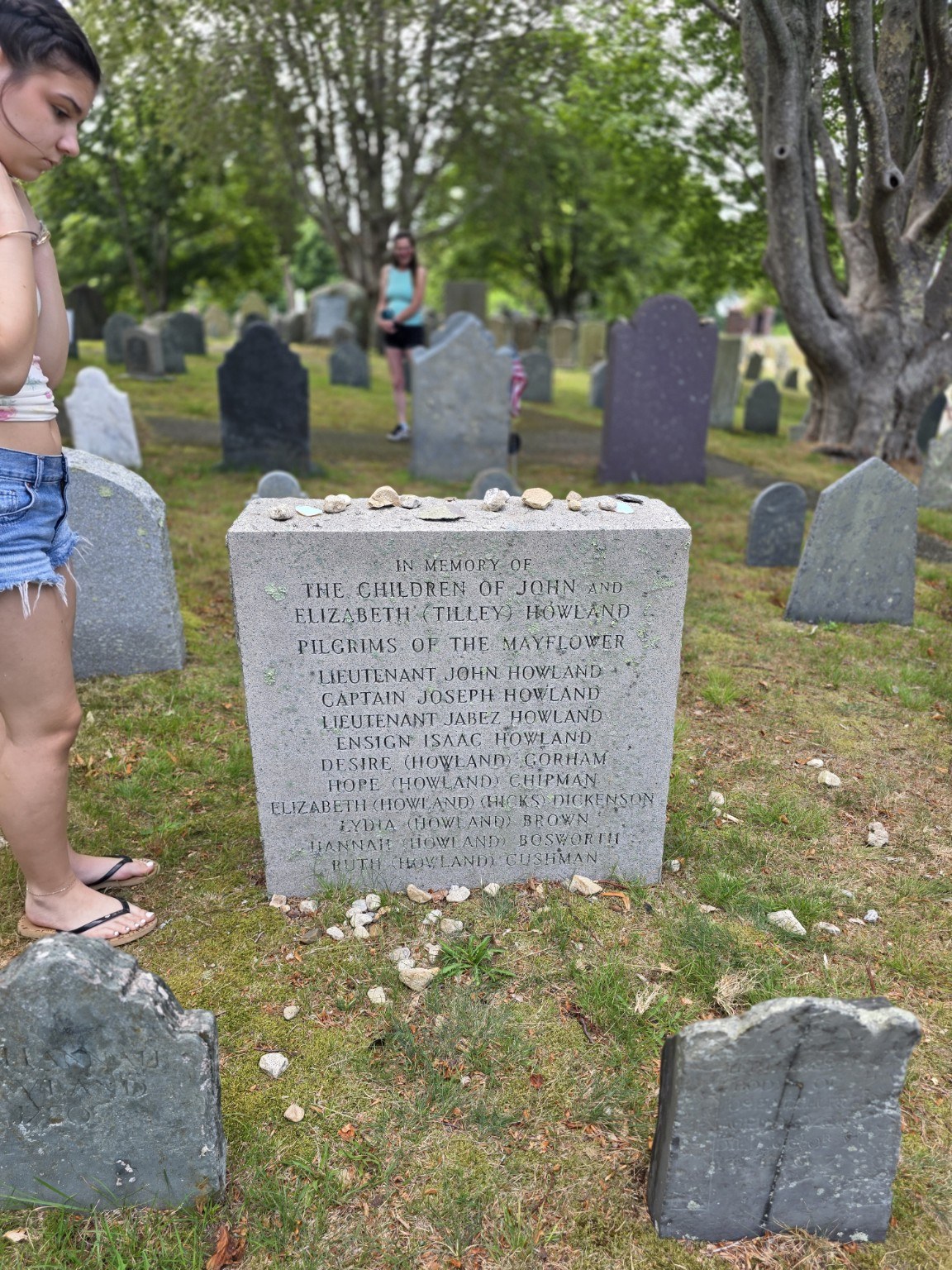
Nearby, a granite memorial names all ten children of John and Elizabeth Tilley Howland. That stone turns two famous Mayflower names into a family: the children through whom their descendants spread across generations—including ours.
Cemetery symbolism
A stonecarver's history book
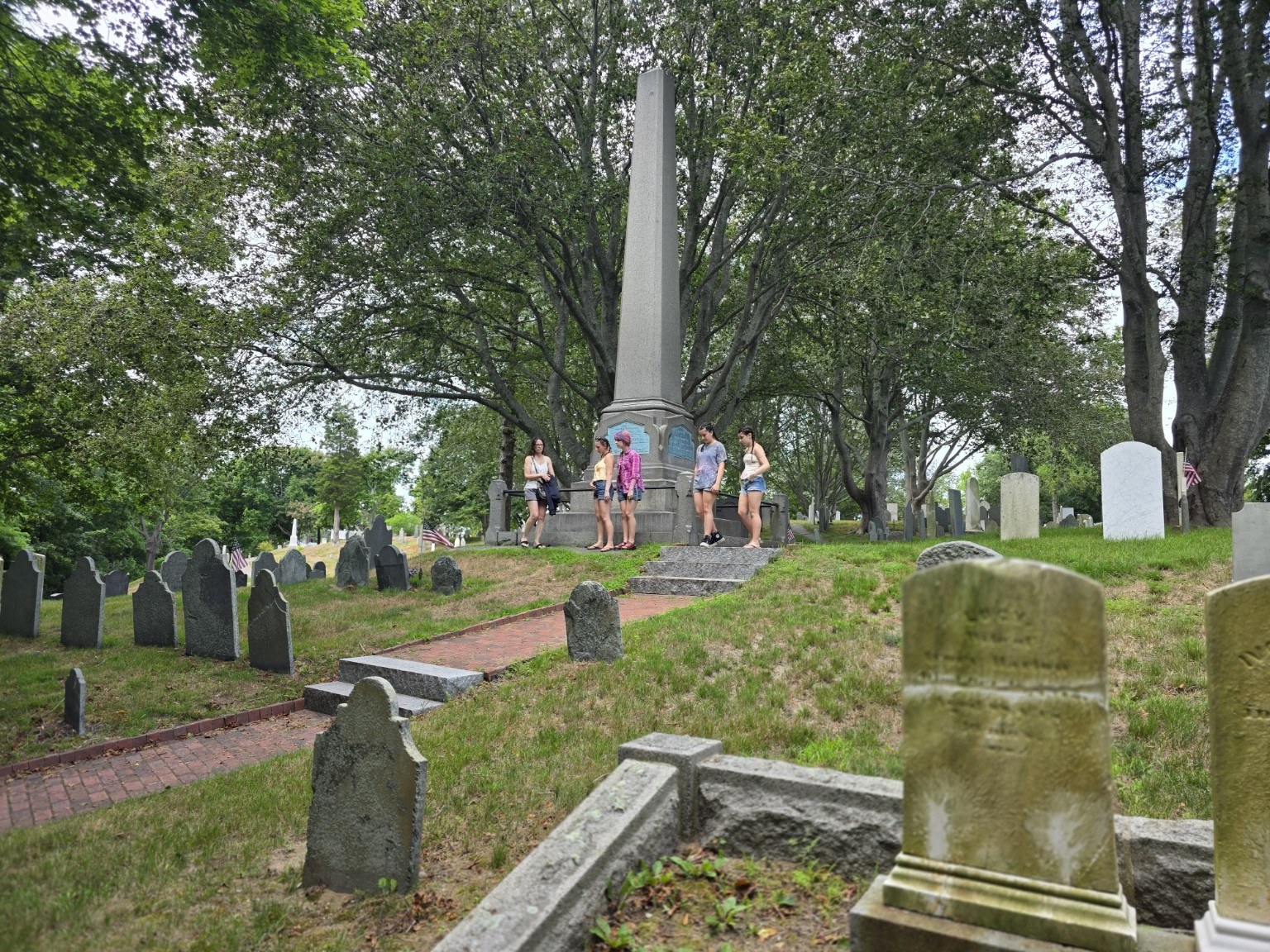
The oldest markers speak in symbols before they speak in words. Winged skulls remind the living that death comes to everyone. Cherubs and soul effigies suggest the spirit's journey. By the late eighteenth and nineteenth centuries, urns, drapery, columns, and architectural borders begin to replace the blunt imagery of bones and skulls.
For someone who spends so much time caring for cemeteries, Burial Hill felt like an open-air classroom—except this classroom has better carvings and considerably steeper aisles.
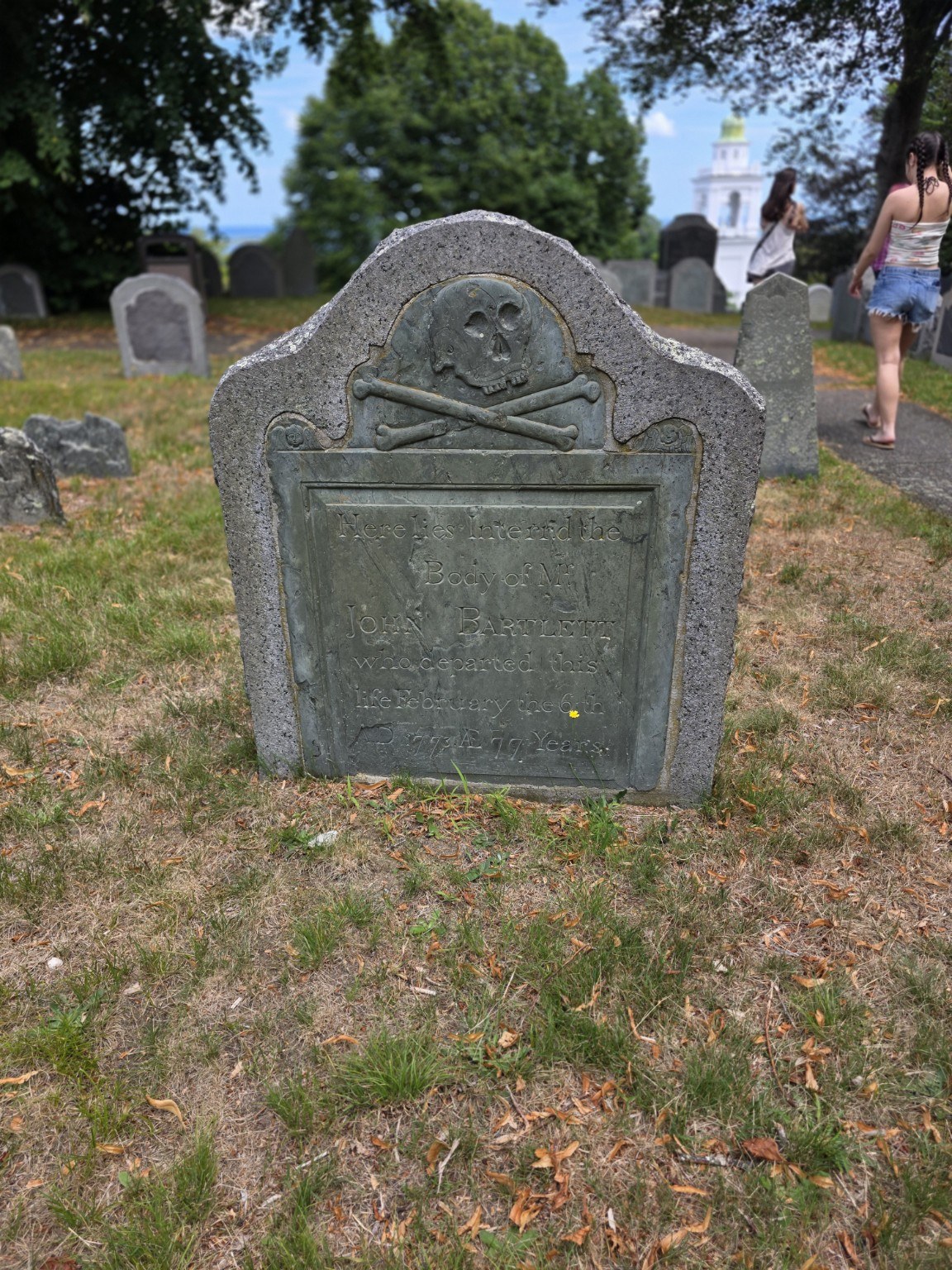
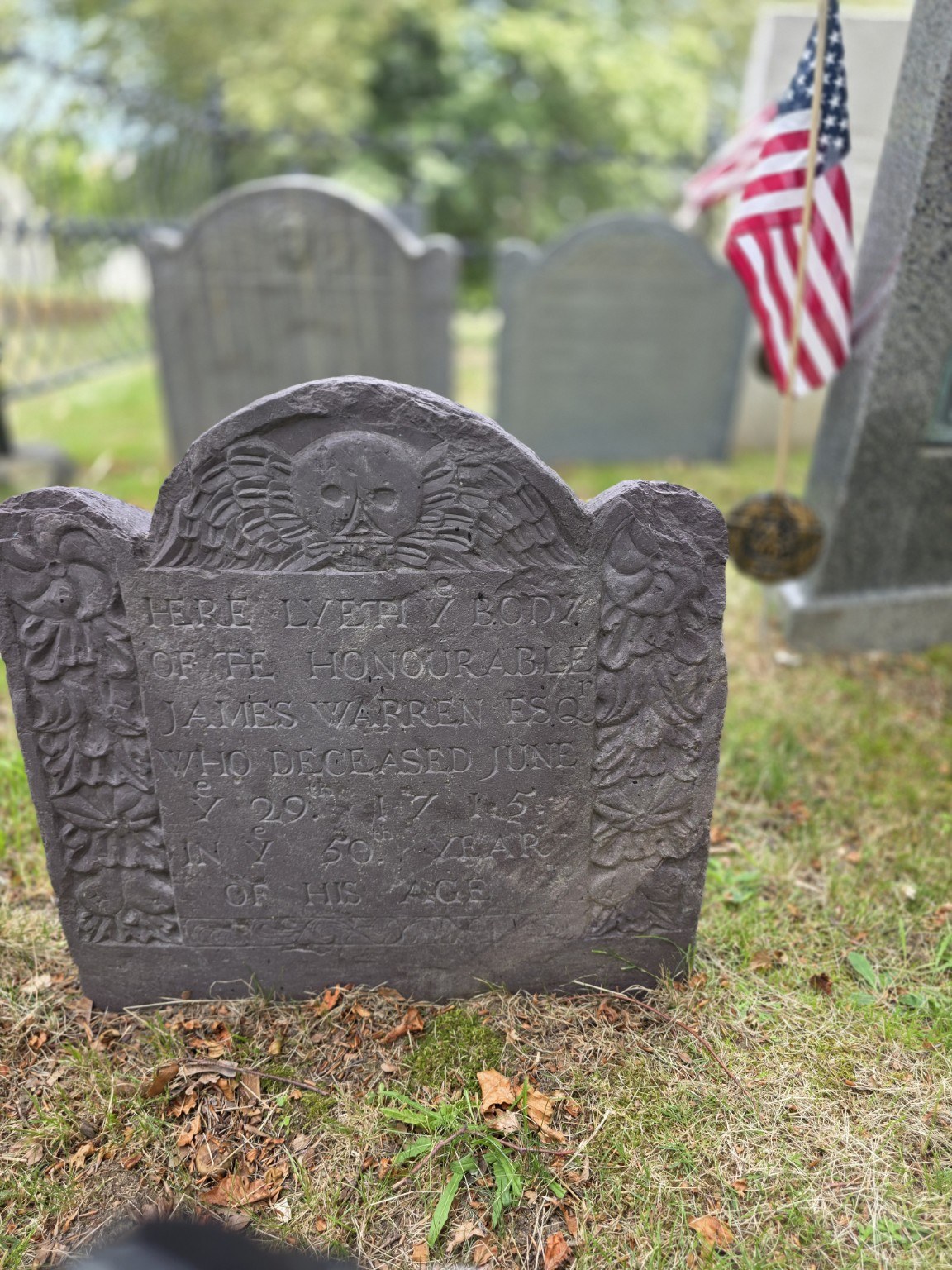
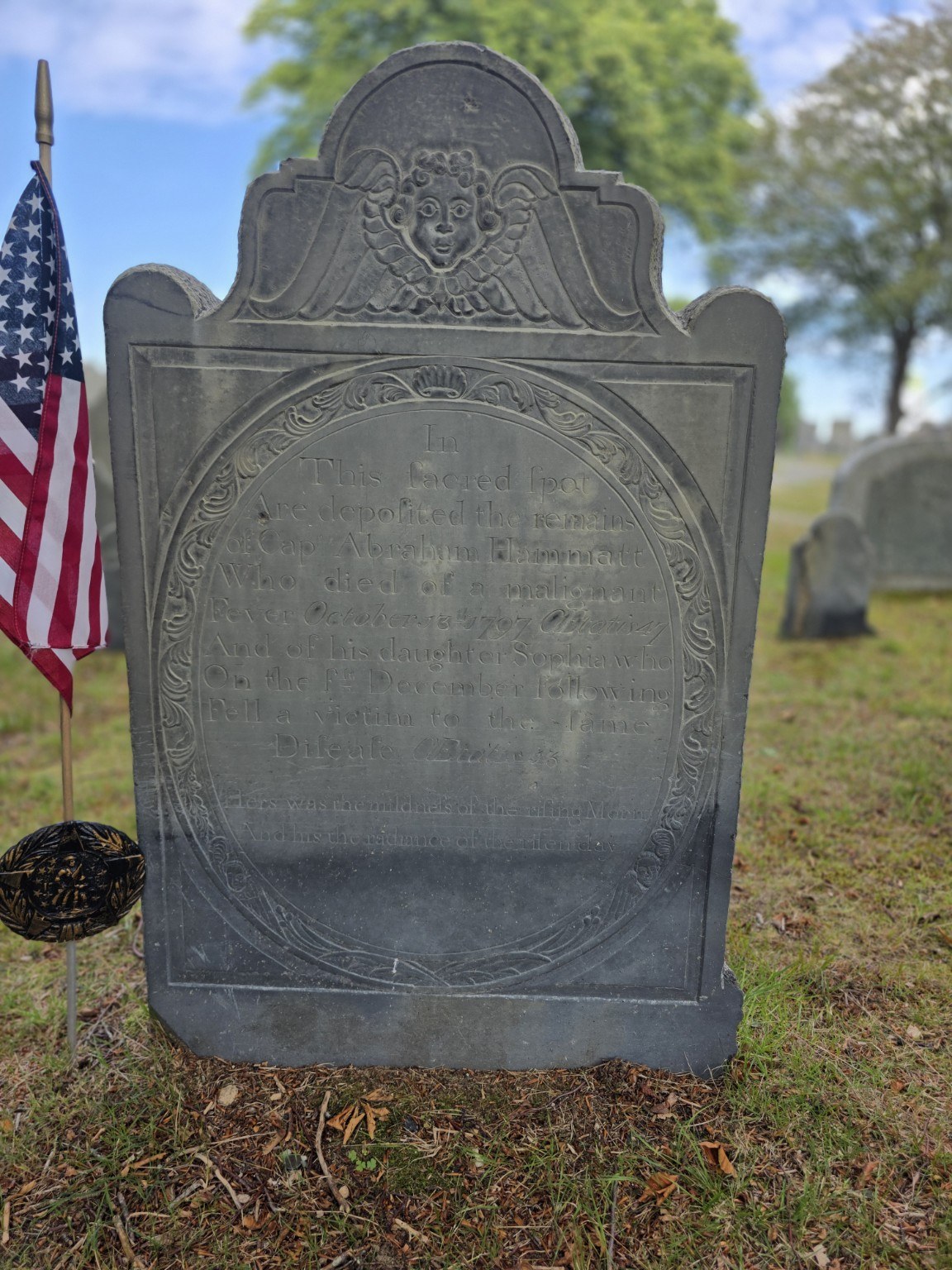
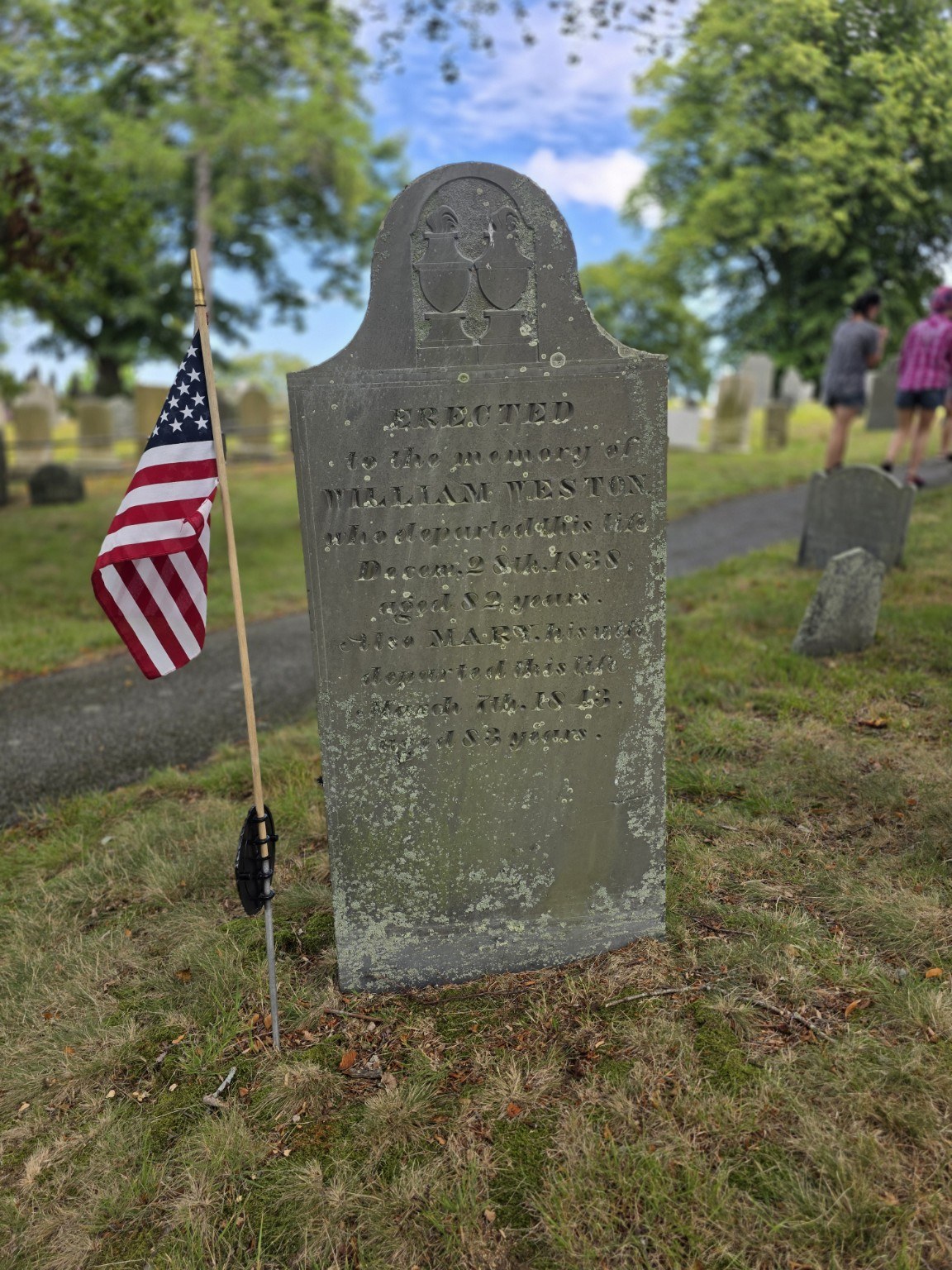
Every stone is both a record of one life and a surviving piece of the time that made it.
The largest landmark
The Cushman obelisk
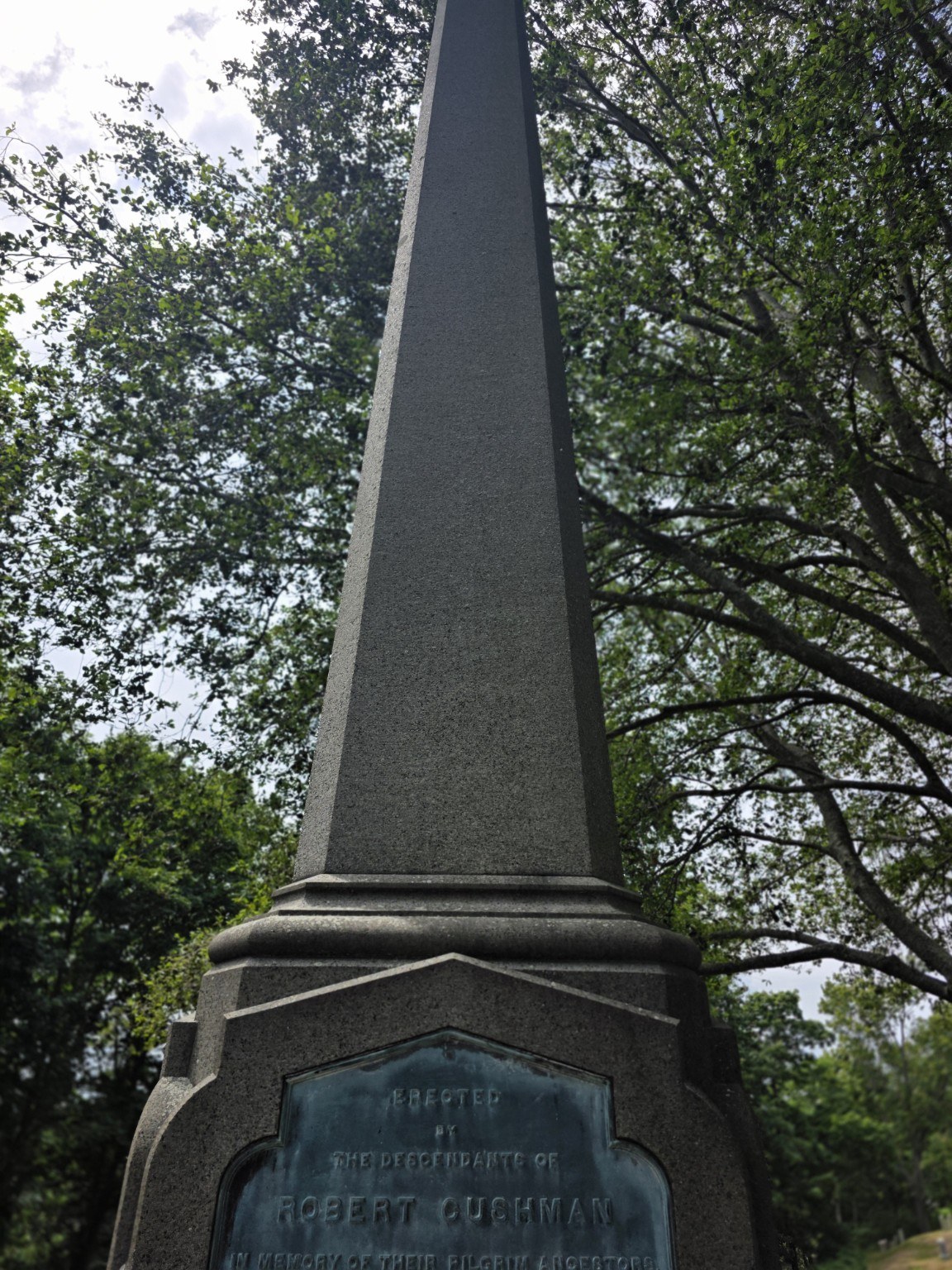
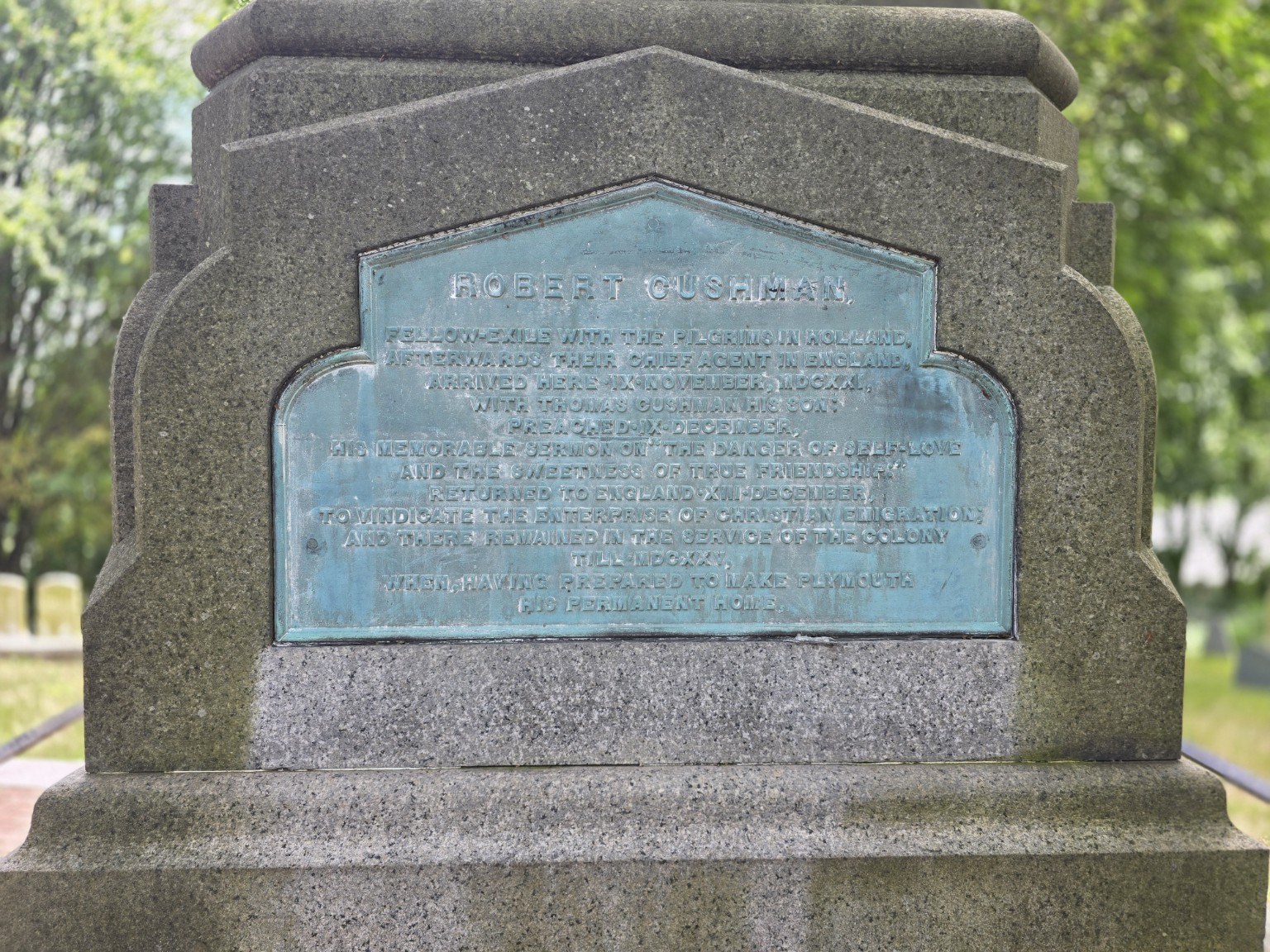
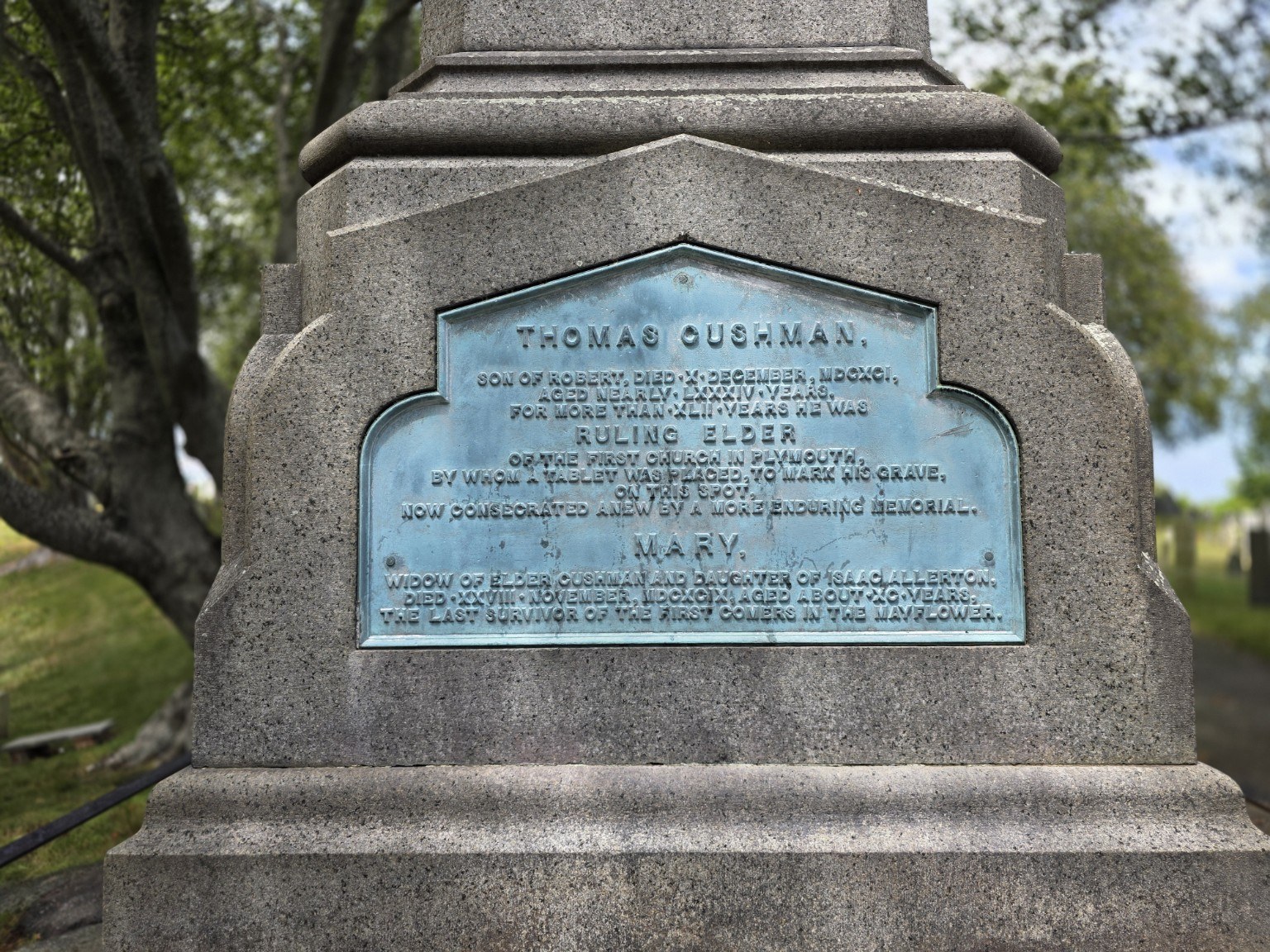
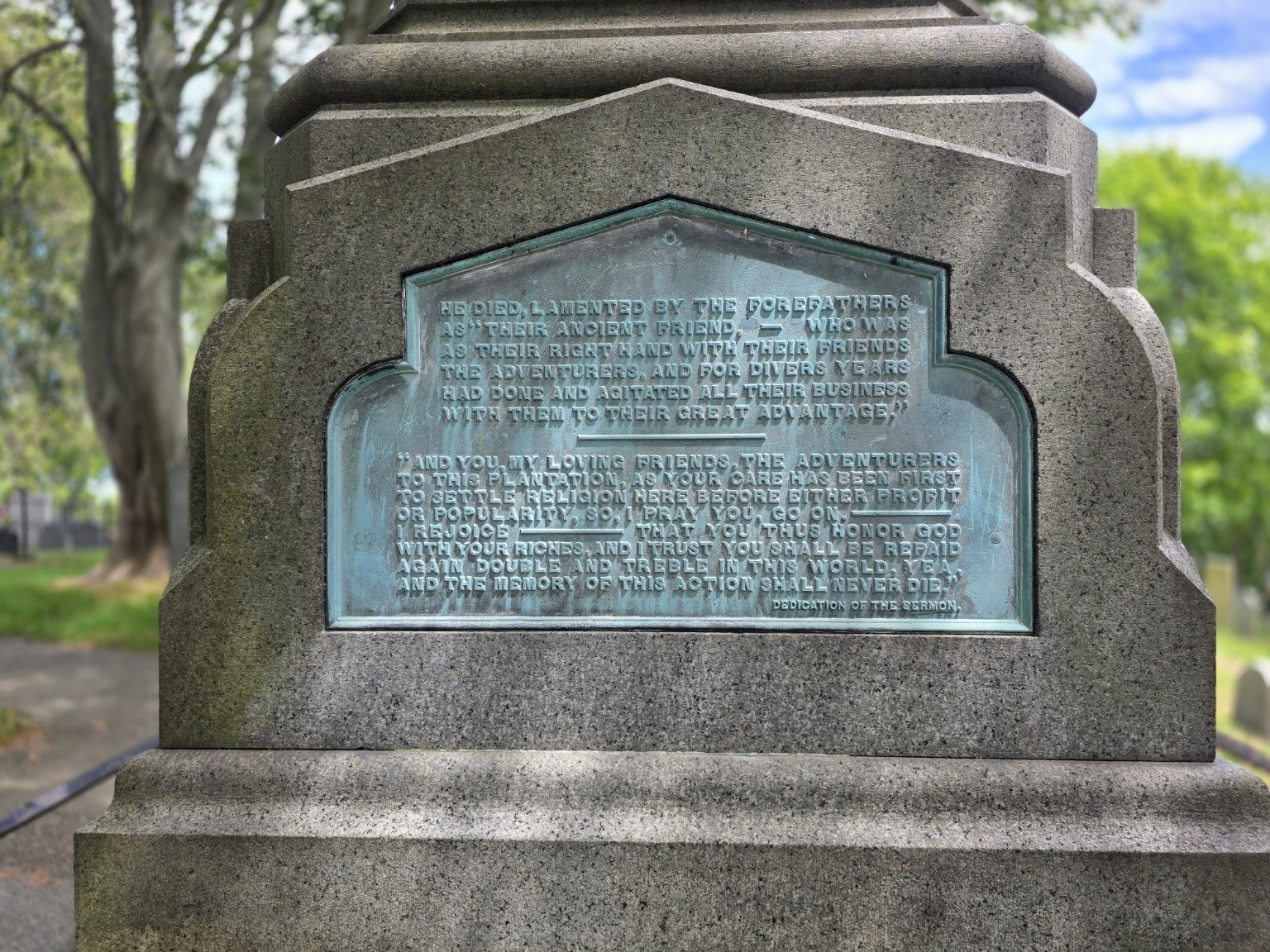
The Cushman monument dominates its part of the hill. Bronze panels remember Robert Cushman, his son Thomas, and Mary Allerton Cushman. One panel describes Robert's work for the Plymouth settlers; another remembers Thomas as a longtime ruling elder; the inscriptions also connect Mary Allerton to the original Mayflower company.
Military and Revolutionary history
From colony to country
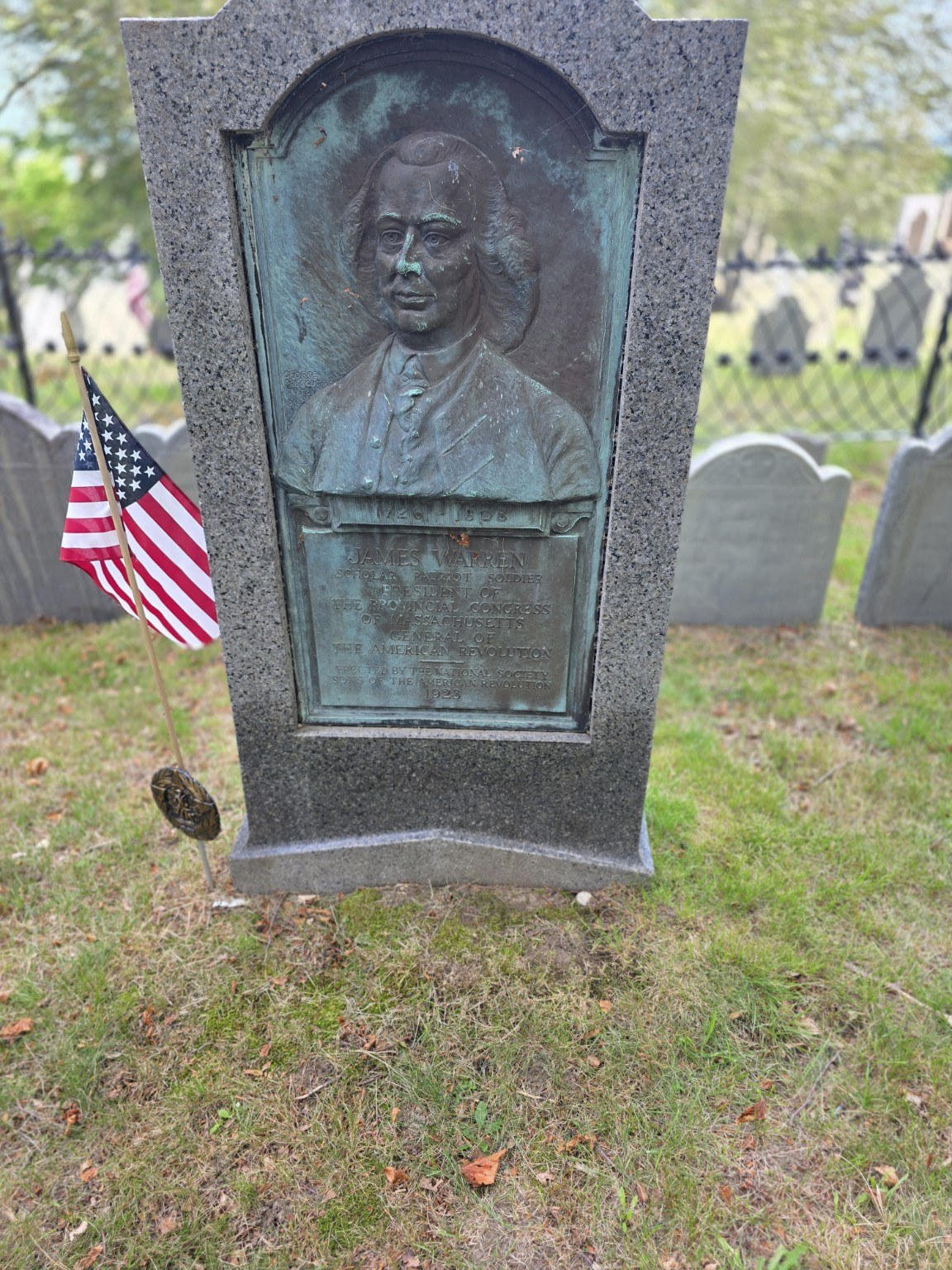
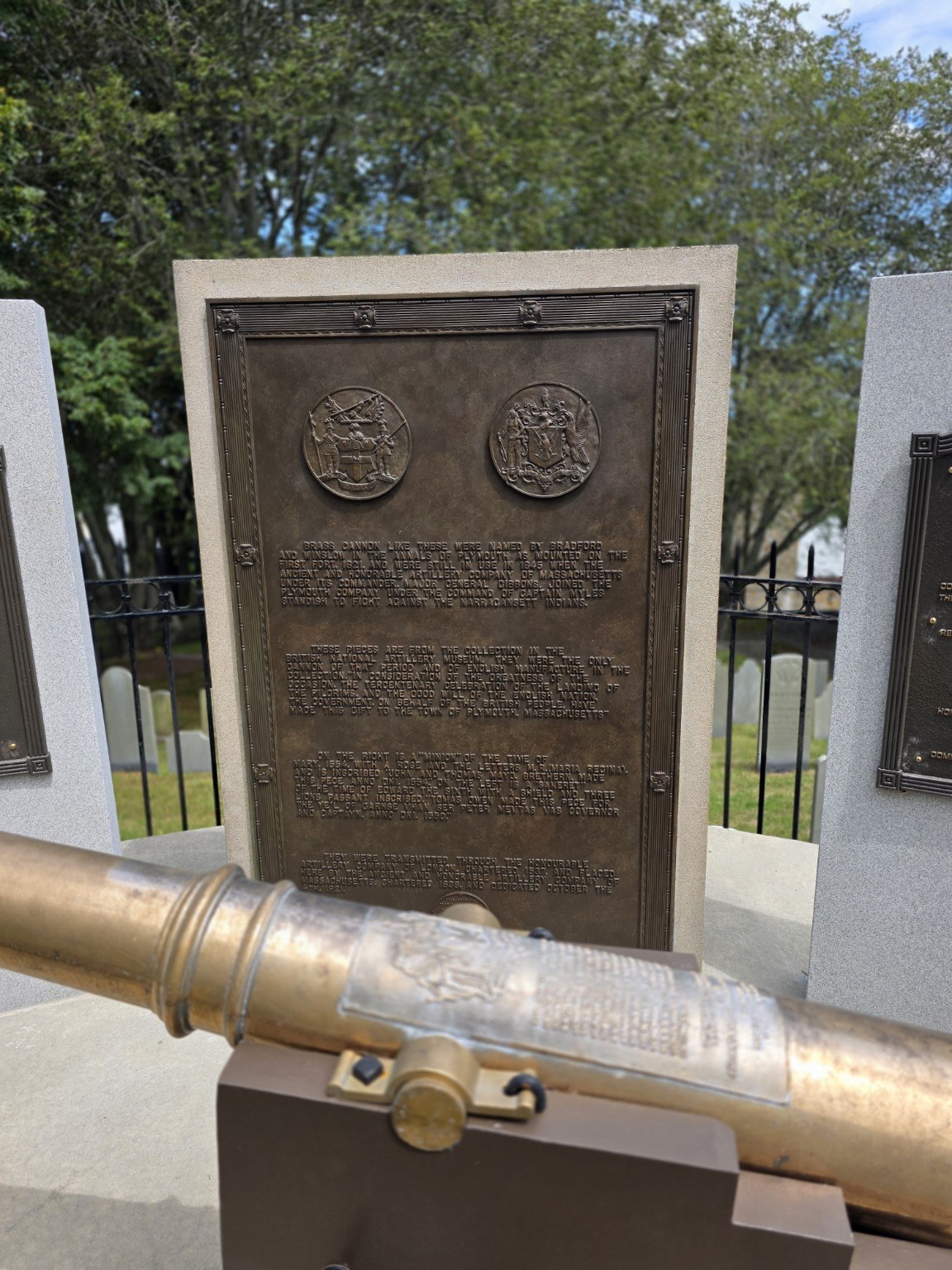
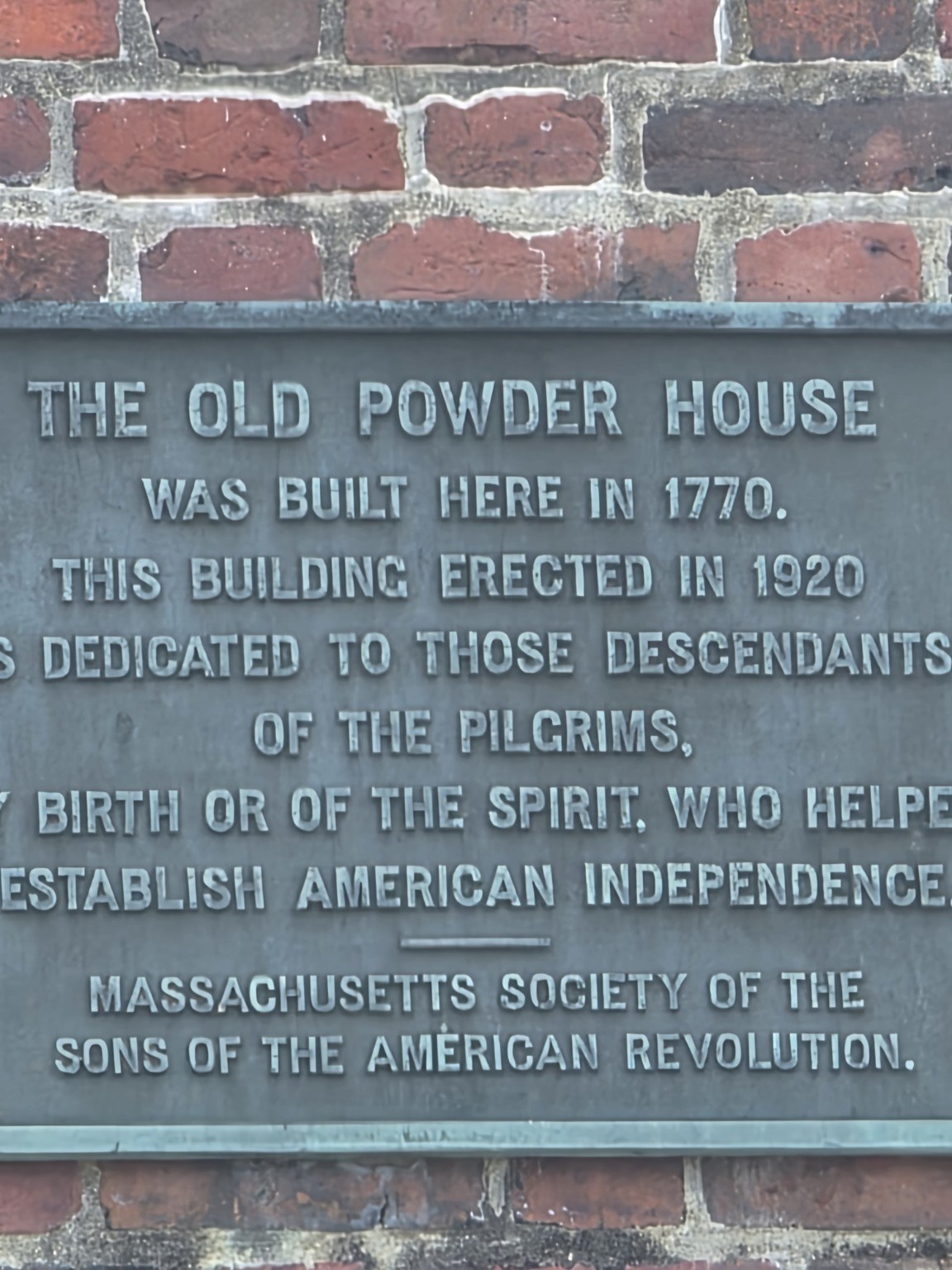
The hill also preserves the later American story. The James Warren memorial honors a Revolutionary patriot, while the cannon display recalls Plymouth's defensive history. Near town, the Old Powder House plaque connects descendants of the Pilgrims with the struggle for American independence.
The people in the story
Seven climbed the hill
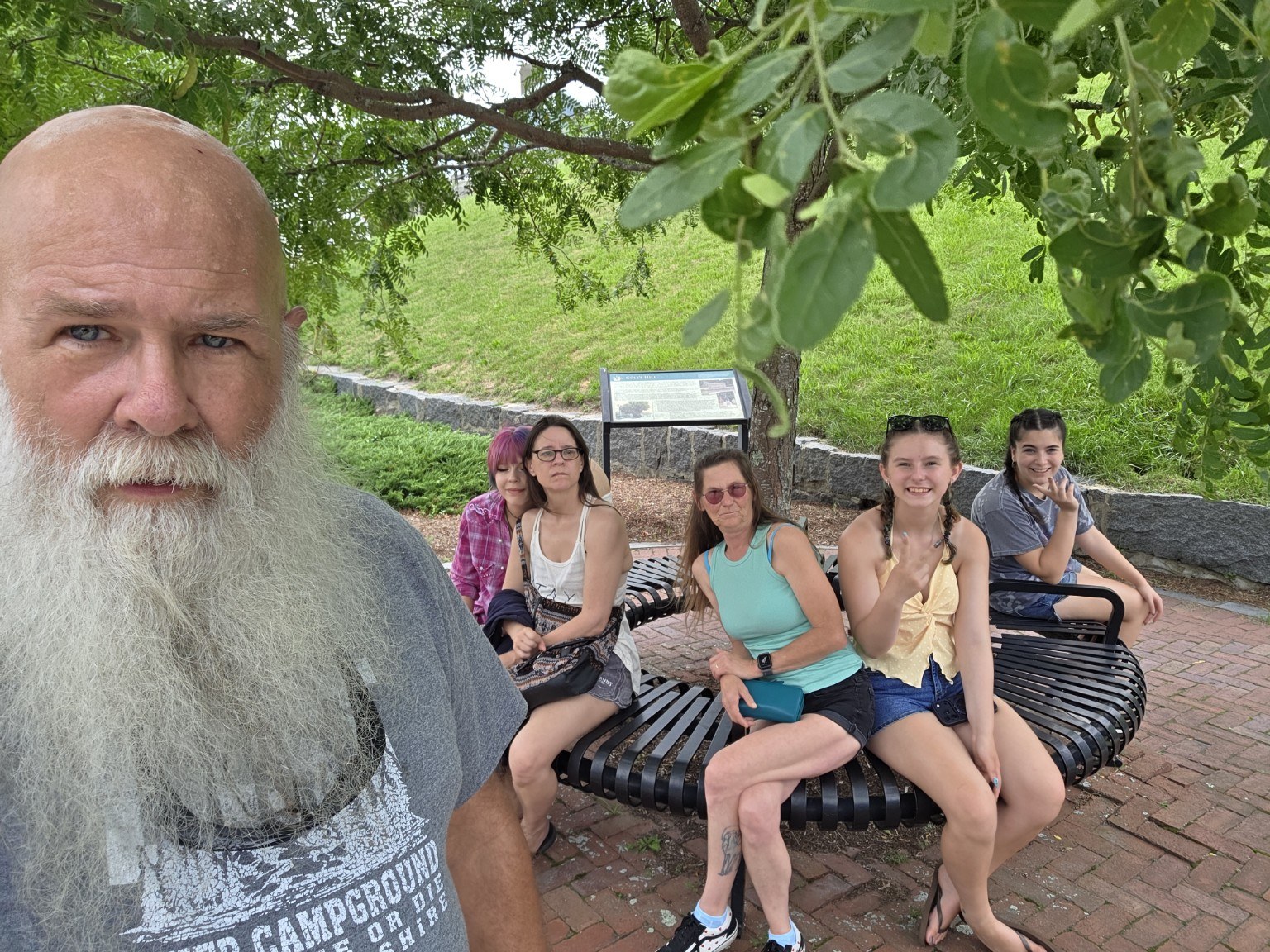
The crew appears throughout the photographs—reading stones, waiting while Ken takes just one more picture, and resting under the trees. Their presence is what turns a cemetery survey into a family memory.
Back to the waterfront
The hill leads back to the harbor
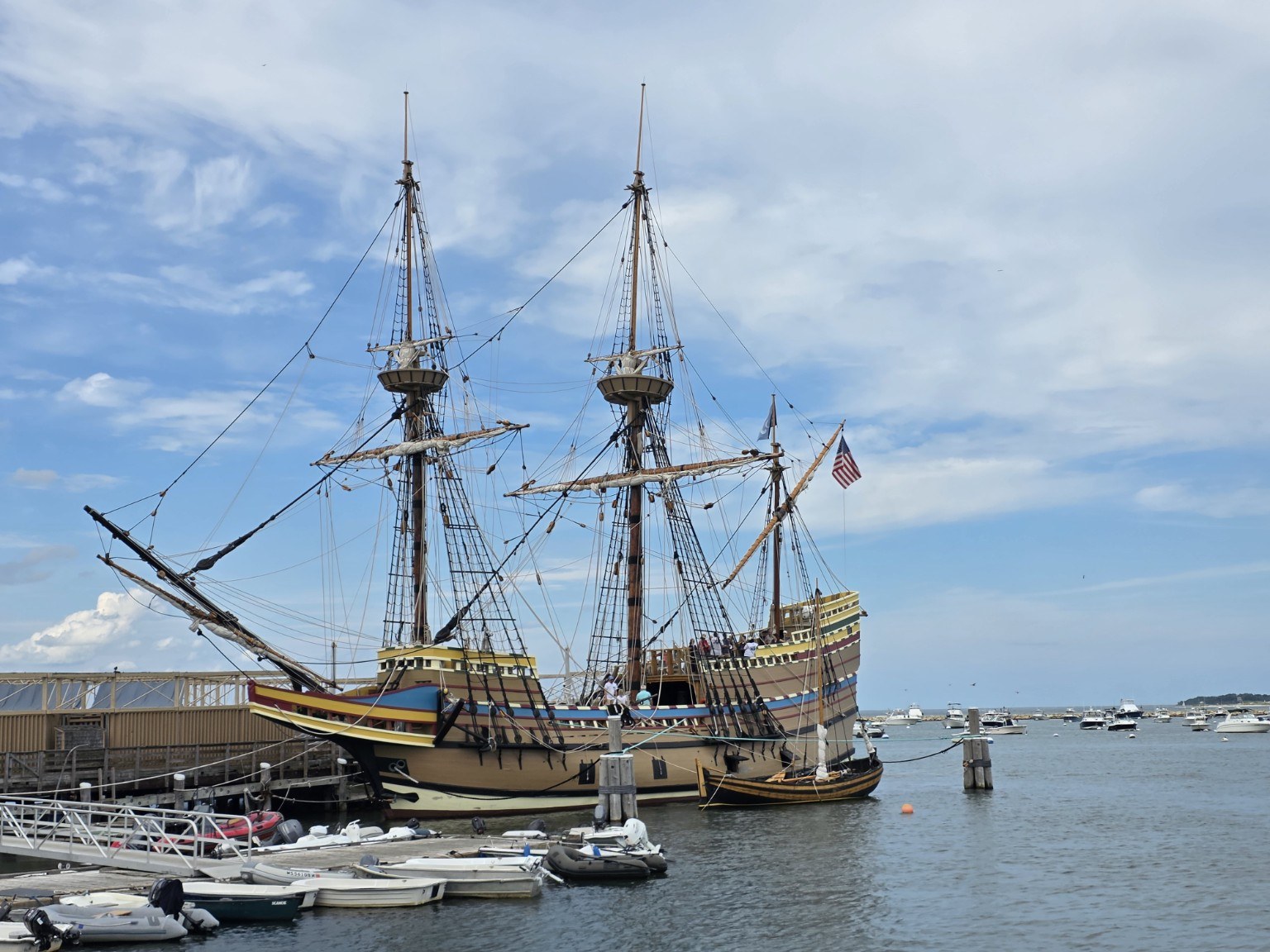
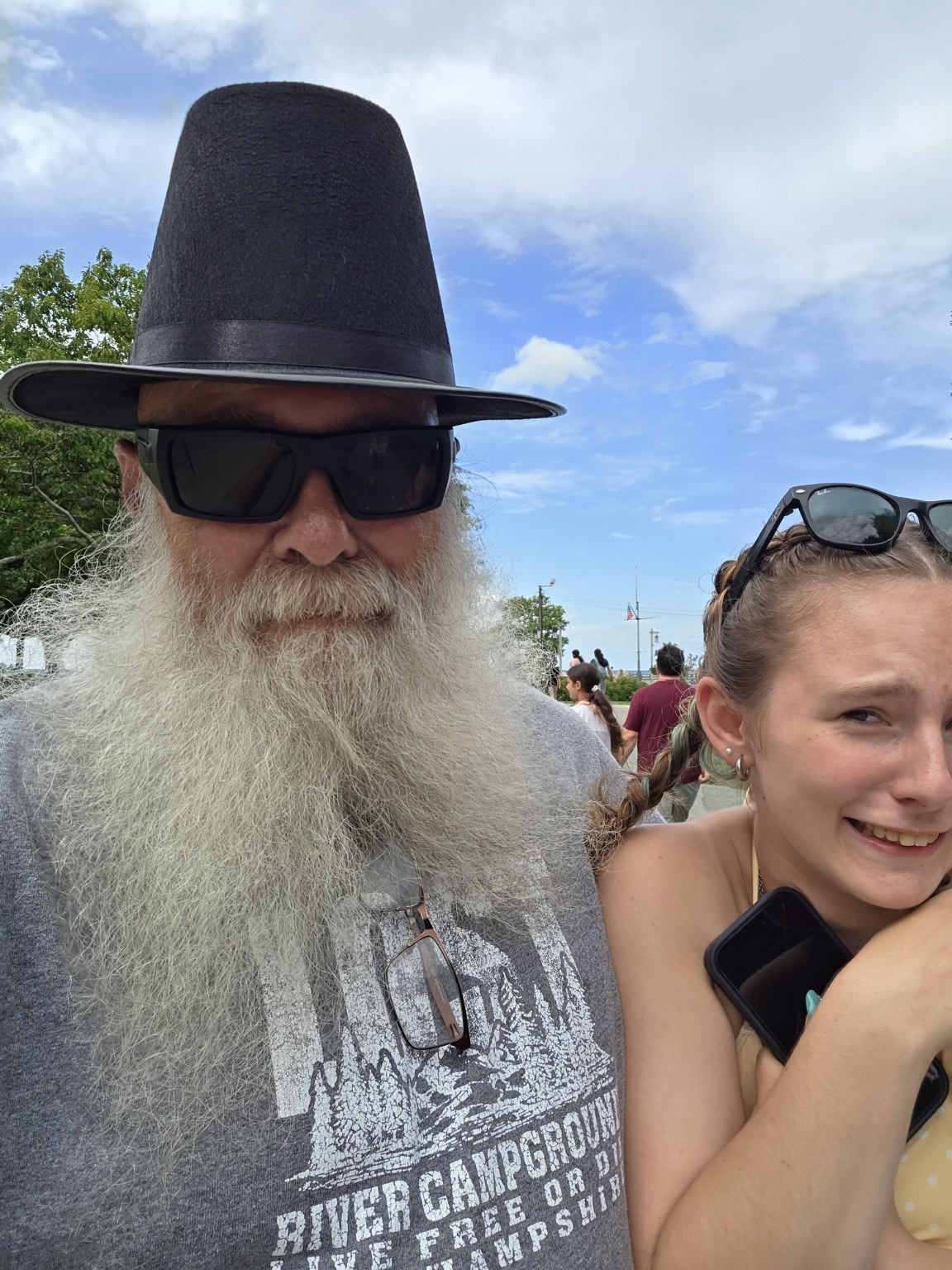
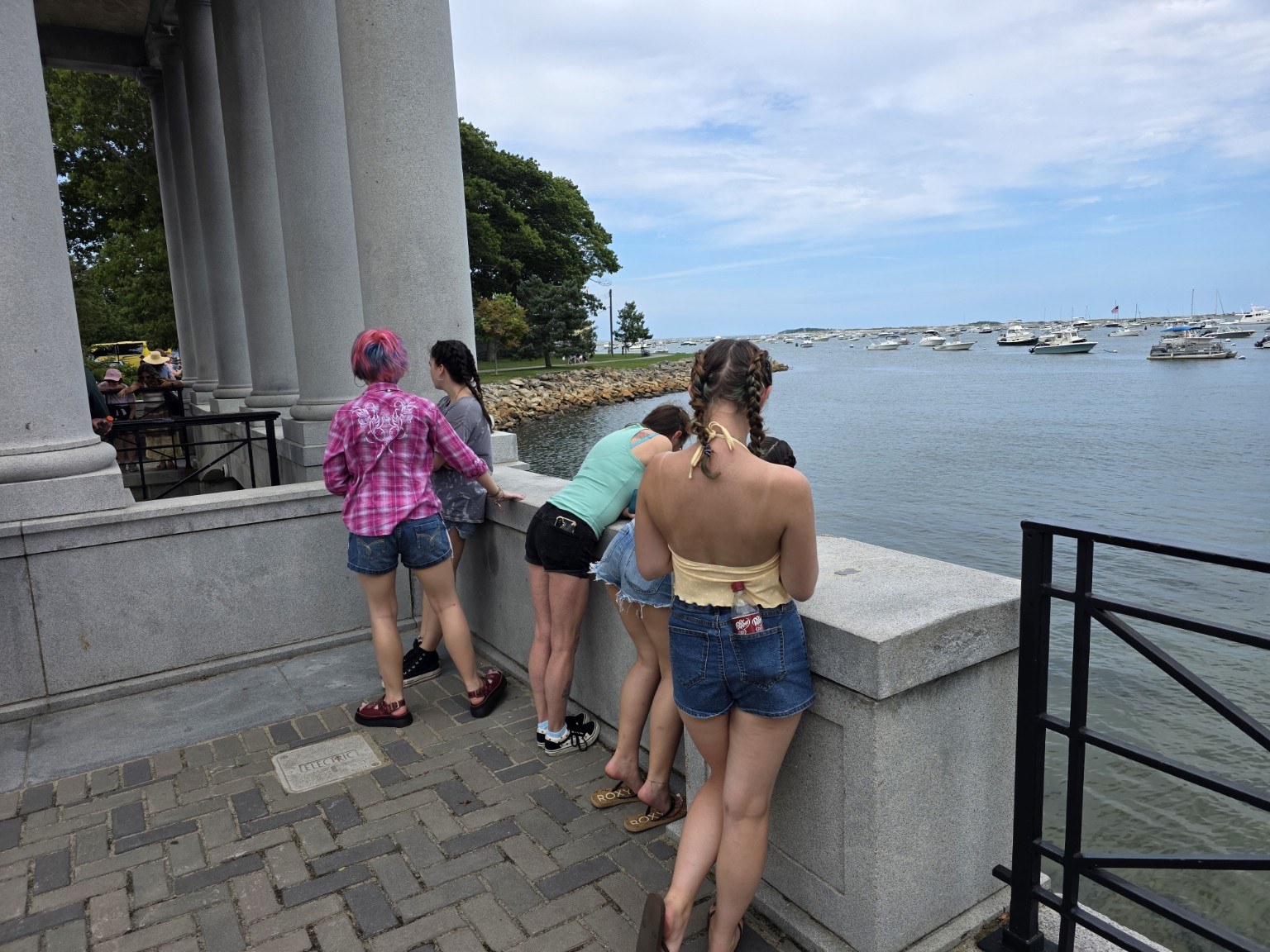
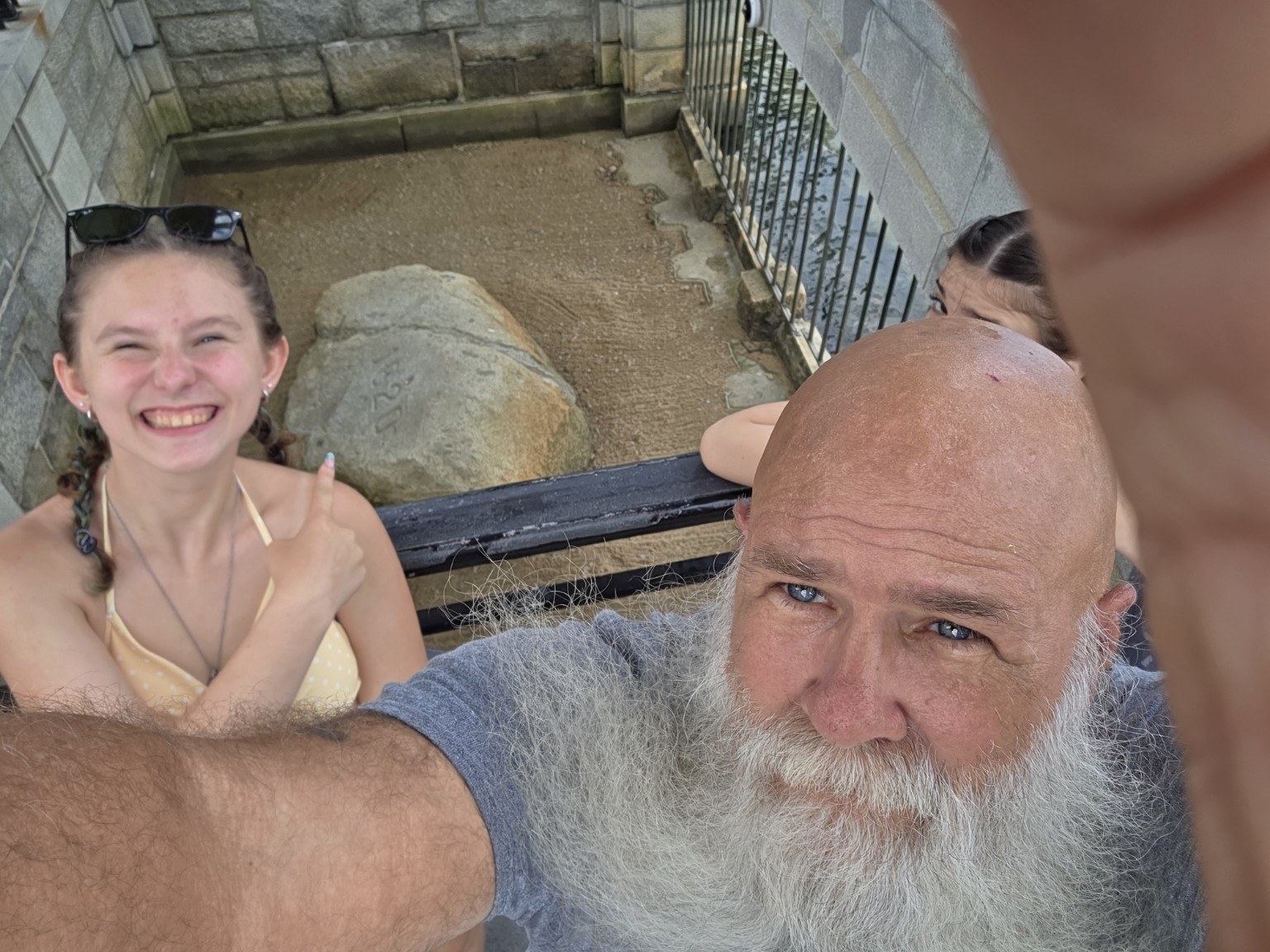
From Burial Hill we walked downhill toward the water. Mayflower II stood in the harbor, the crew gathered around the Plymouth Rock enclosure, and a tall Pilgrim hat briefly became required historical equipment.
The route made a fitting circle: from the resting places of Plymouth's early families to the harbor that brought their story here.
Burial Hill earned its own page
There were simply too many meaningful photographs and too much history to squeeze into one journal paragraph. This page preserves the larger story while the Plymouth live journal continues day by day.
Return to the Day Five journal Return home