33 Sandwich Street · Plymouth, Massachusetts
Not simply another historic house
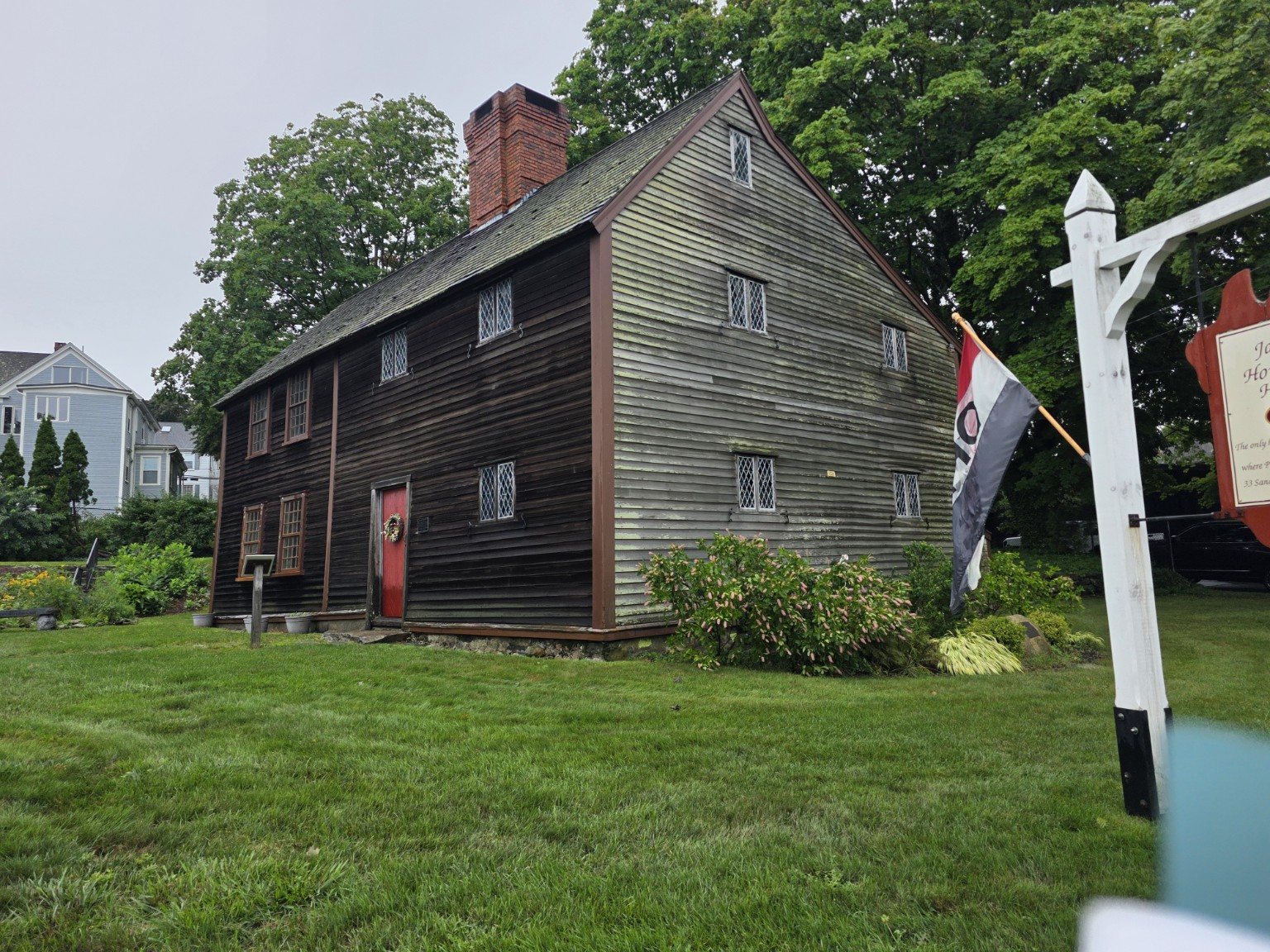
The Jabez Howland House is a seventeenth-century home in downtown Plymouth named for Jabez Howland, the son of Mayflower passengers John Howland and Elizabeth Tilley. The Pilgrim John Howland Society acquired the house in 1912 and preserves it as a museum devoted to the family and the world in which they lived.
For our family, that changed the visit completely. We were not only looking at an old building. We were stepping into a place where the Howland story is preserved through timber, brick, handwritten letters, family records, tools, and the ordinary work of a household.
A house that still feels inhabited
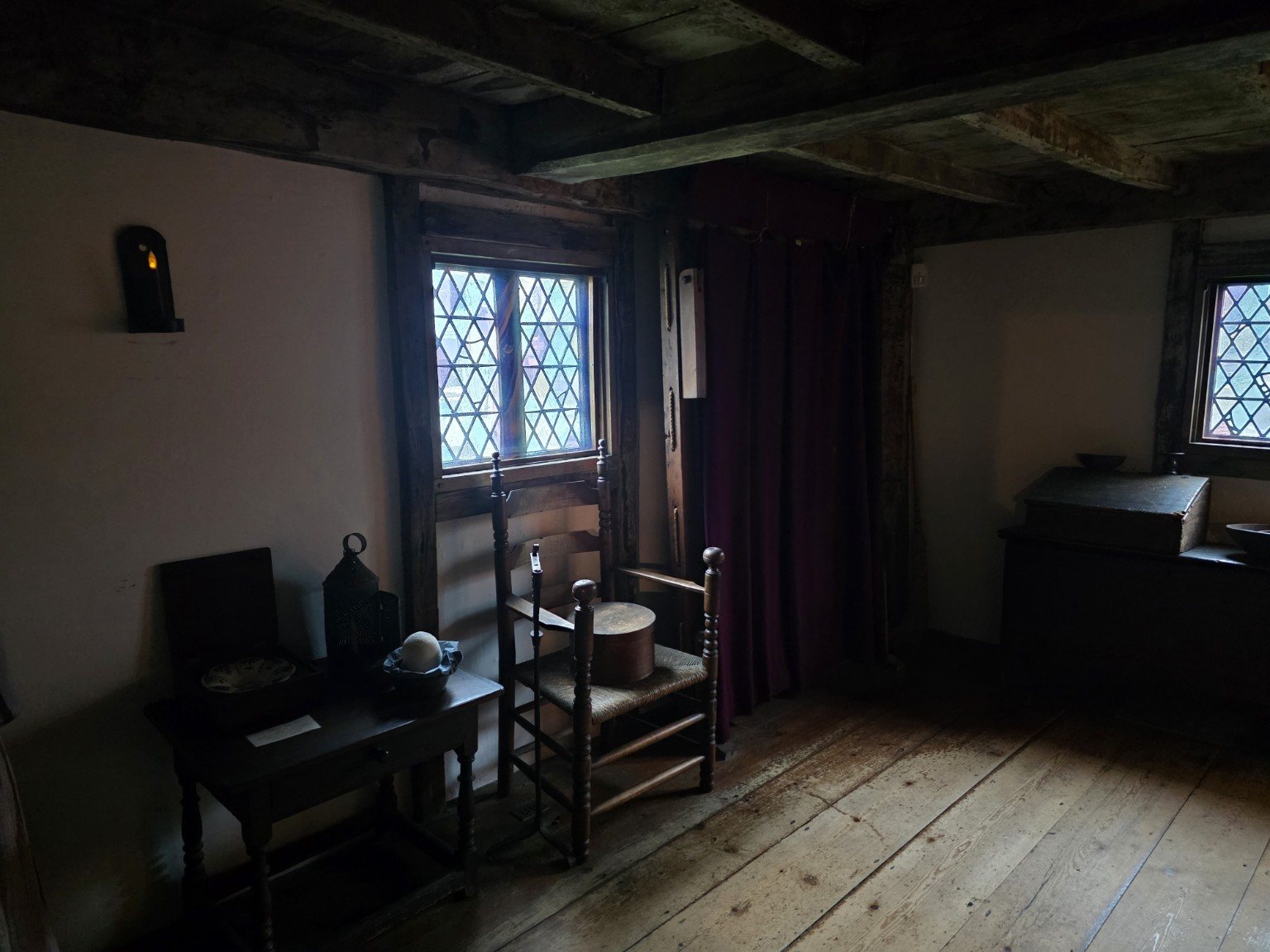
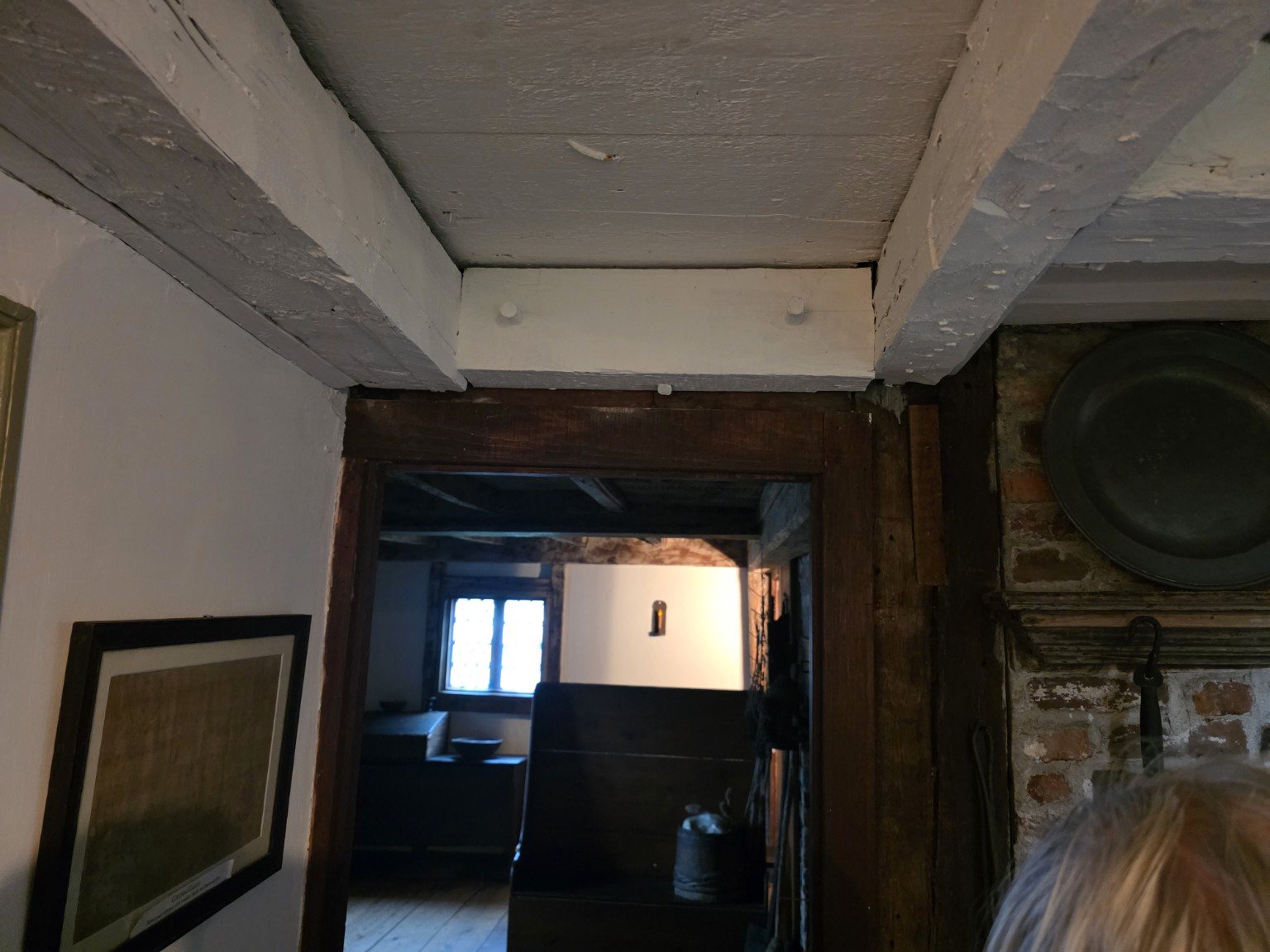
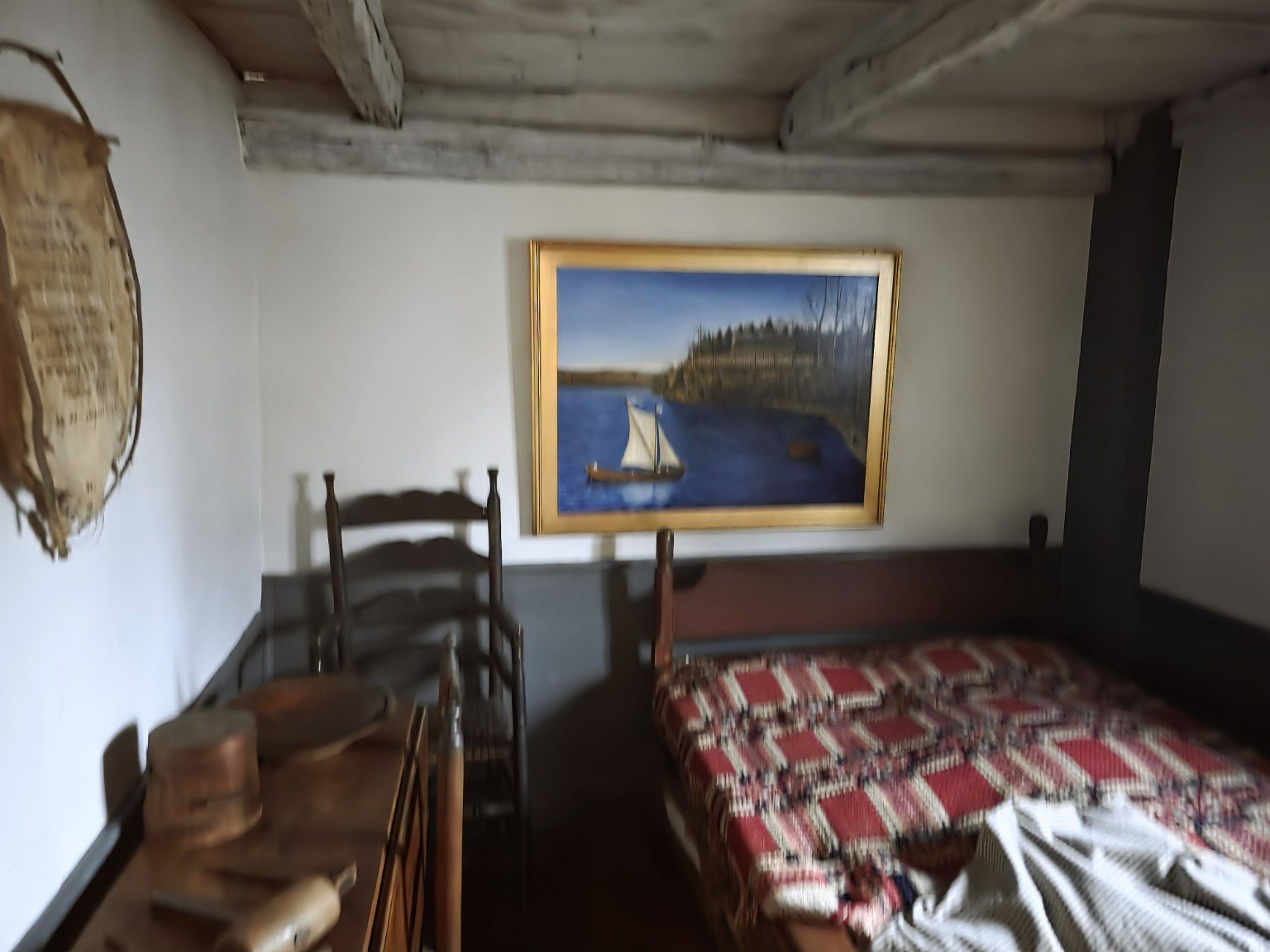
The low ceilings and massive beams make the age of the building immediately apparent. Wide floorboards bend and wear beneath each step. Diamond-pane windows admit small pools of light, while the great hearth remains the visual and practical center of the house.
The museum does something especially well: it lets the rooms speak. Rather than filling every corner with modern explanation, the furniture, cooking equipment, spinning tools, cupboards, and architecture create the feeling of a household paused in time.
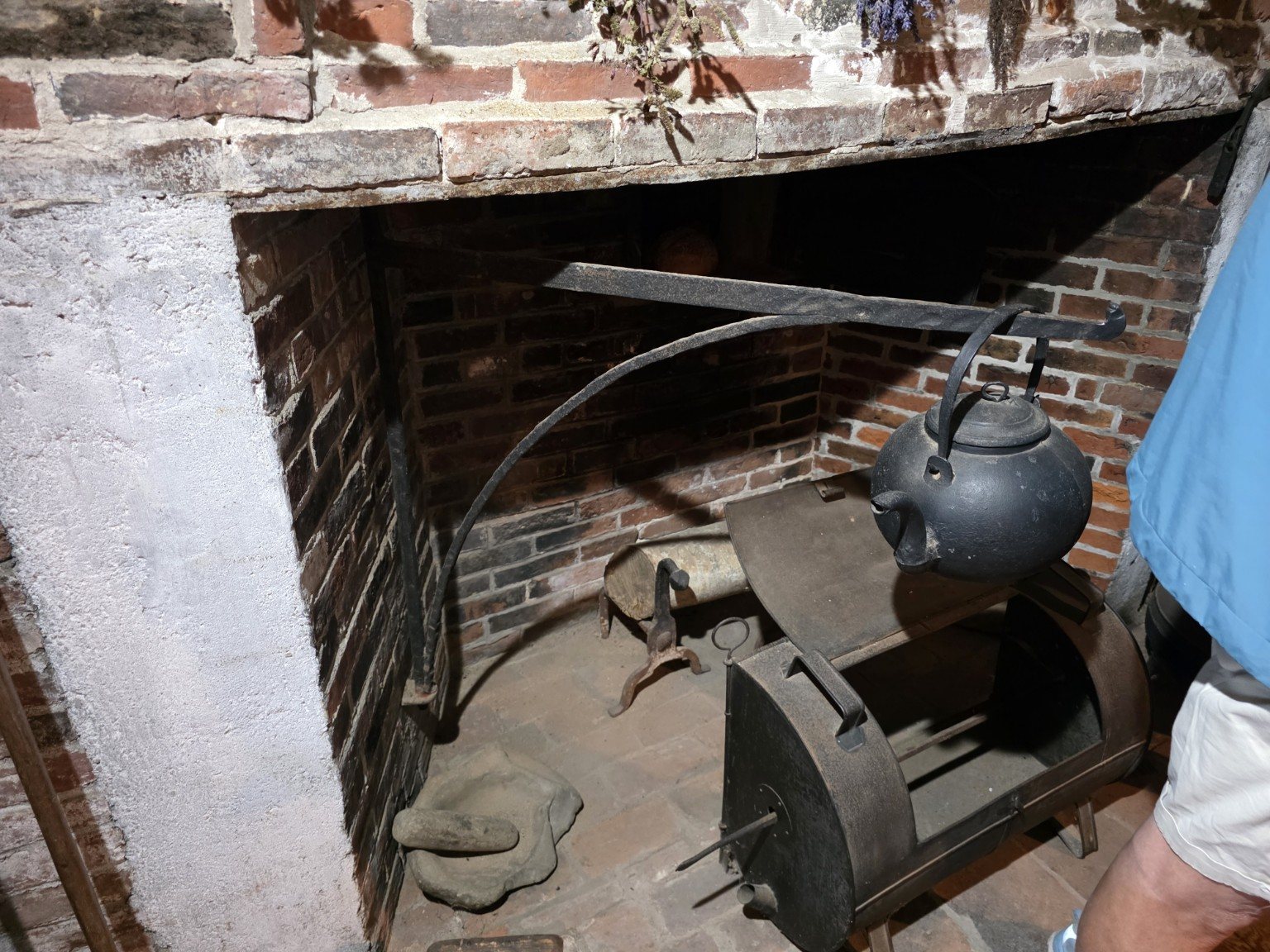
The hearth: kitchen, heat, and household center
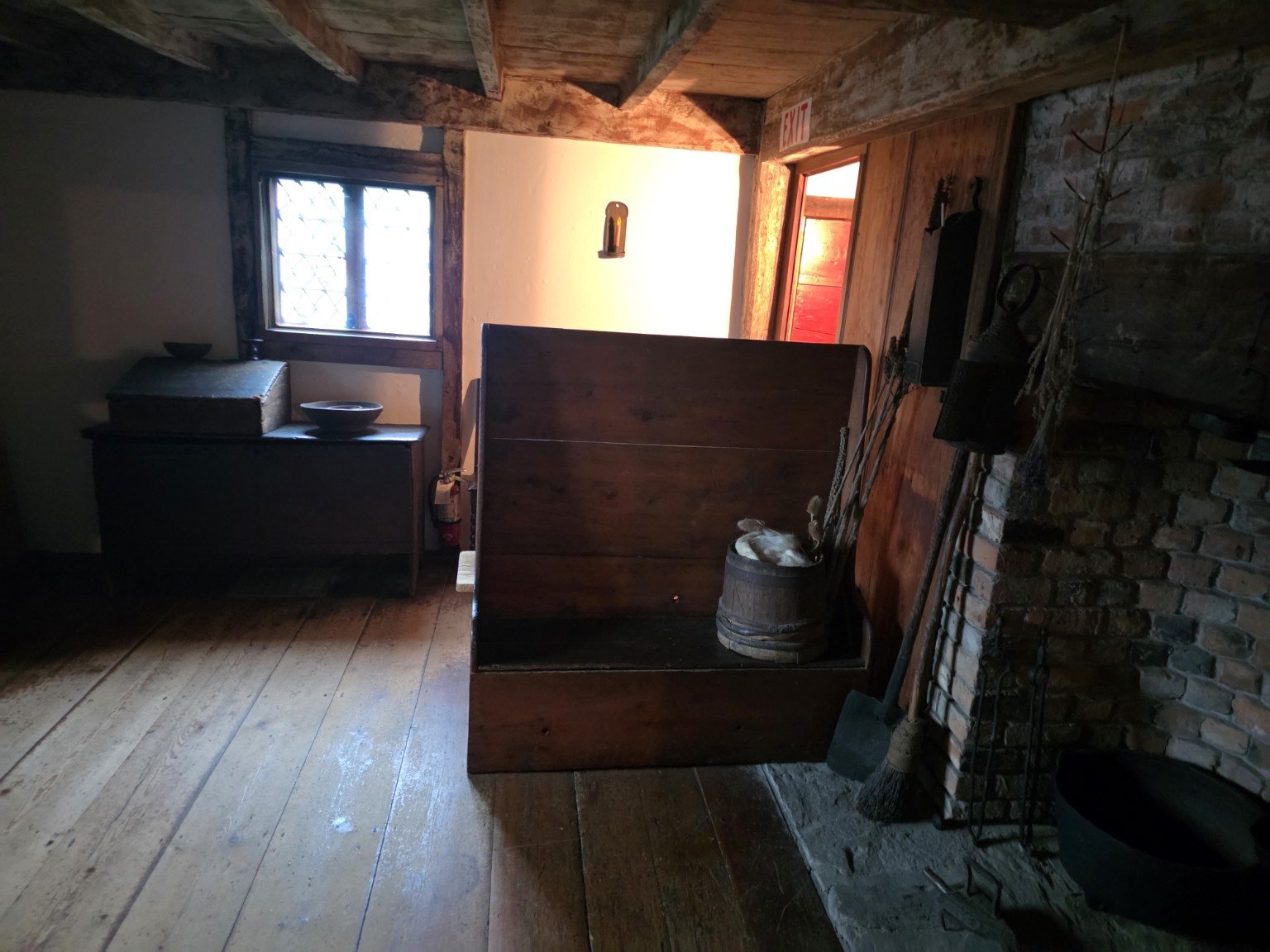
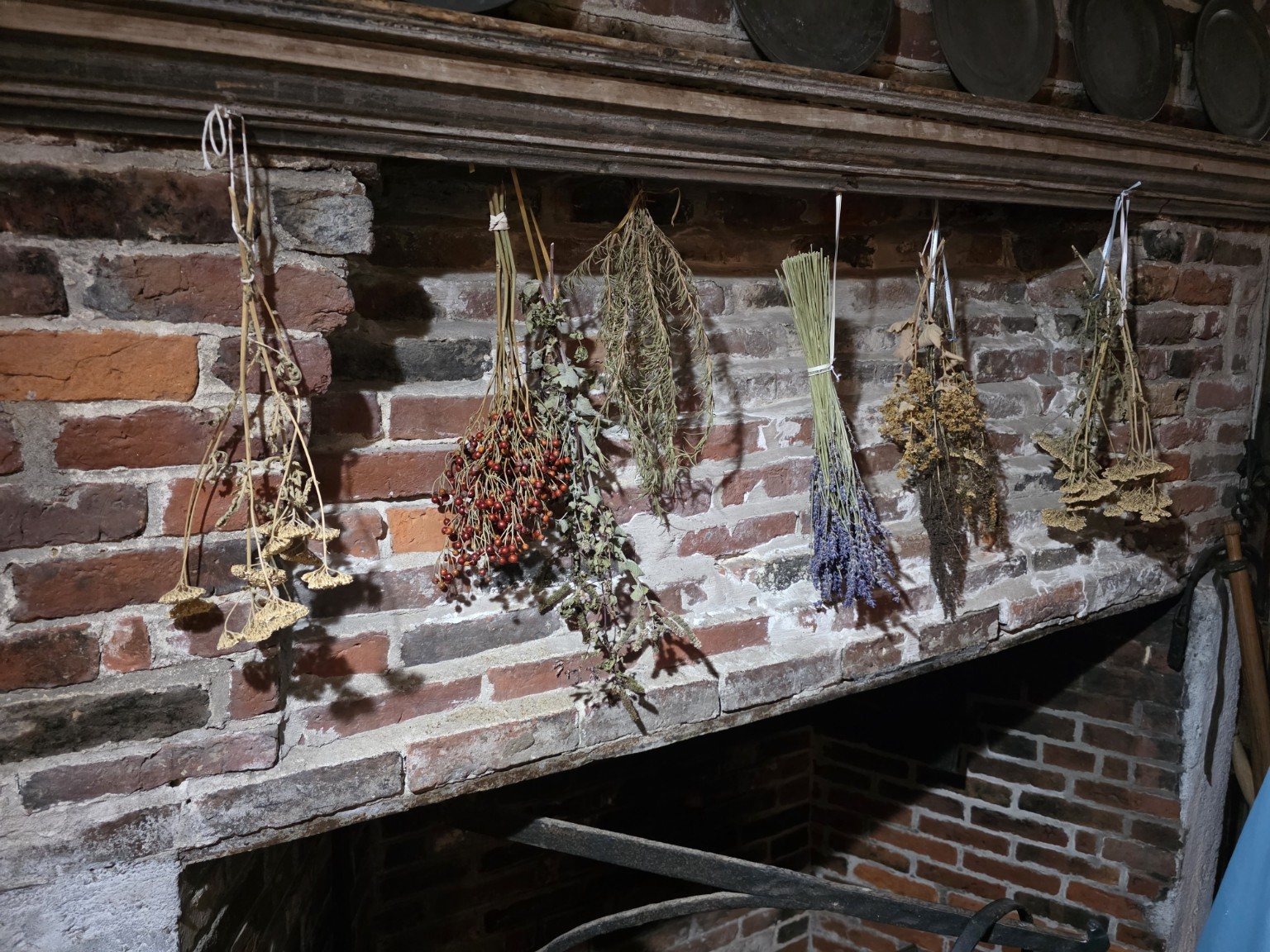
The brick hearth is large enough to make a modern camper kitchen look downright spacious. Iron arms, kettles, cookware, dried plants, and working implements show how many jobs gathered around the fire: cooking, heating water, preserving food, drying herbs, and simply keeping the household warm.
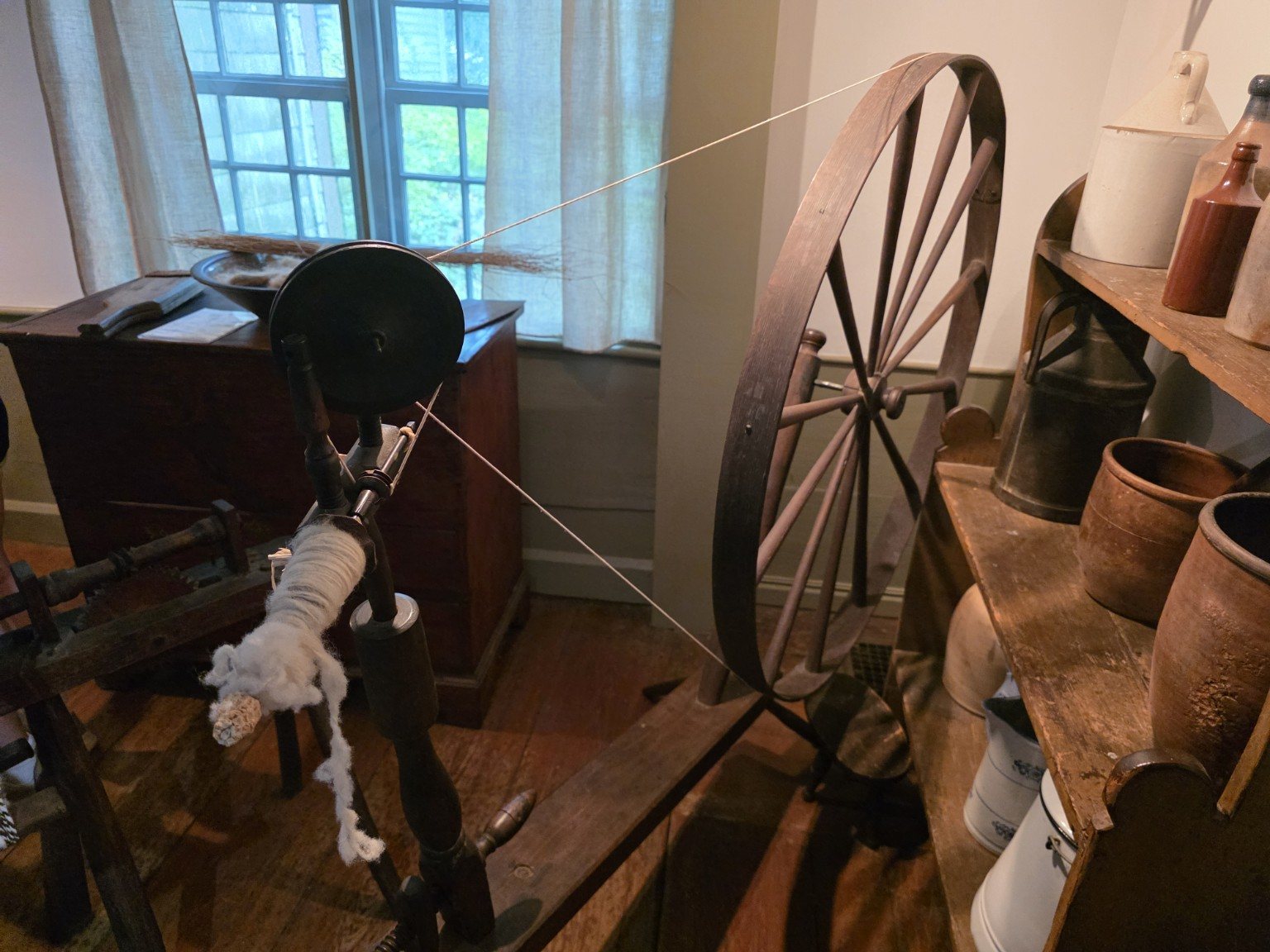
Work of the household
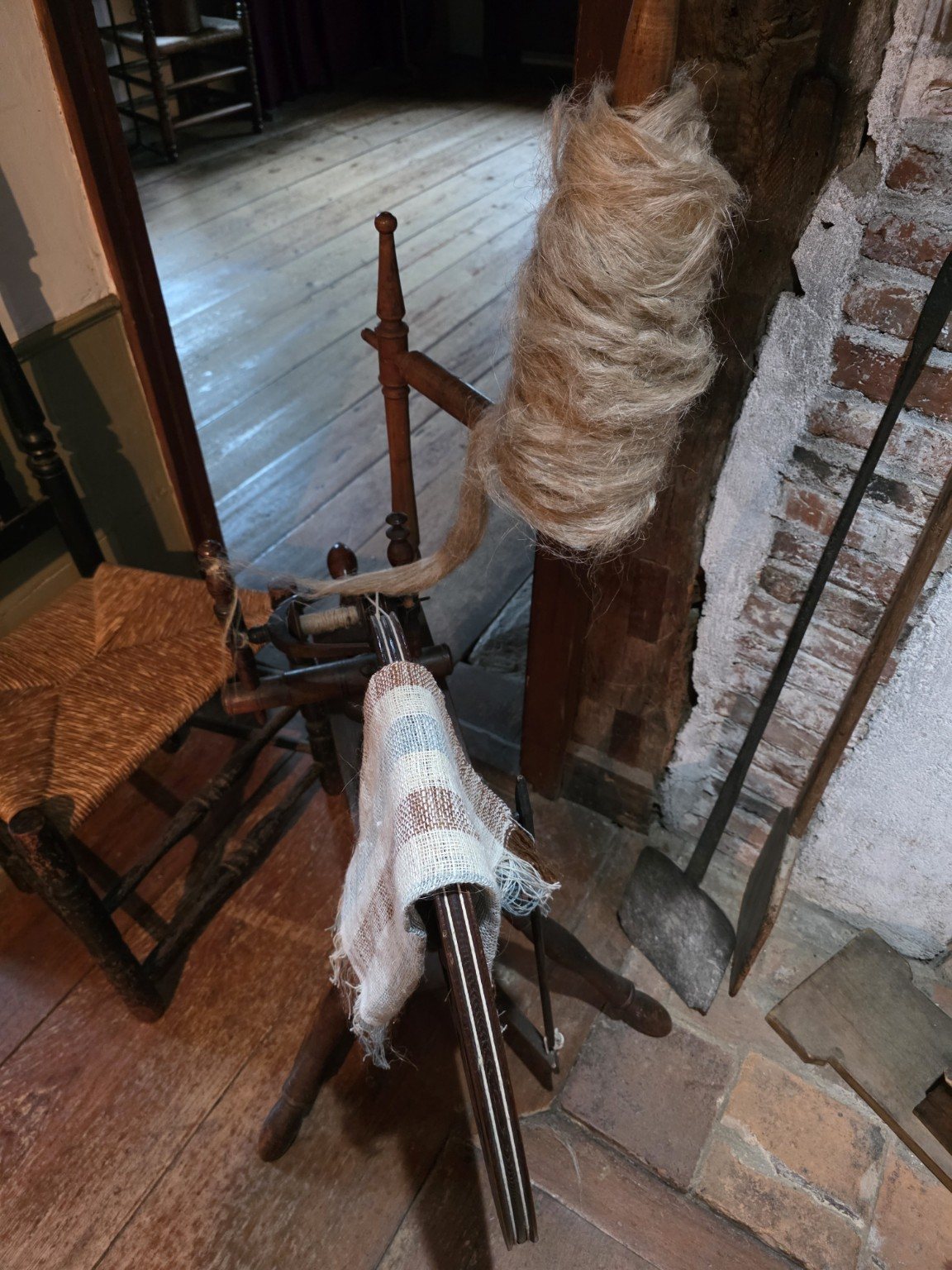
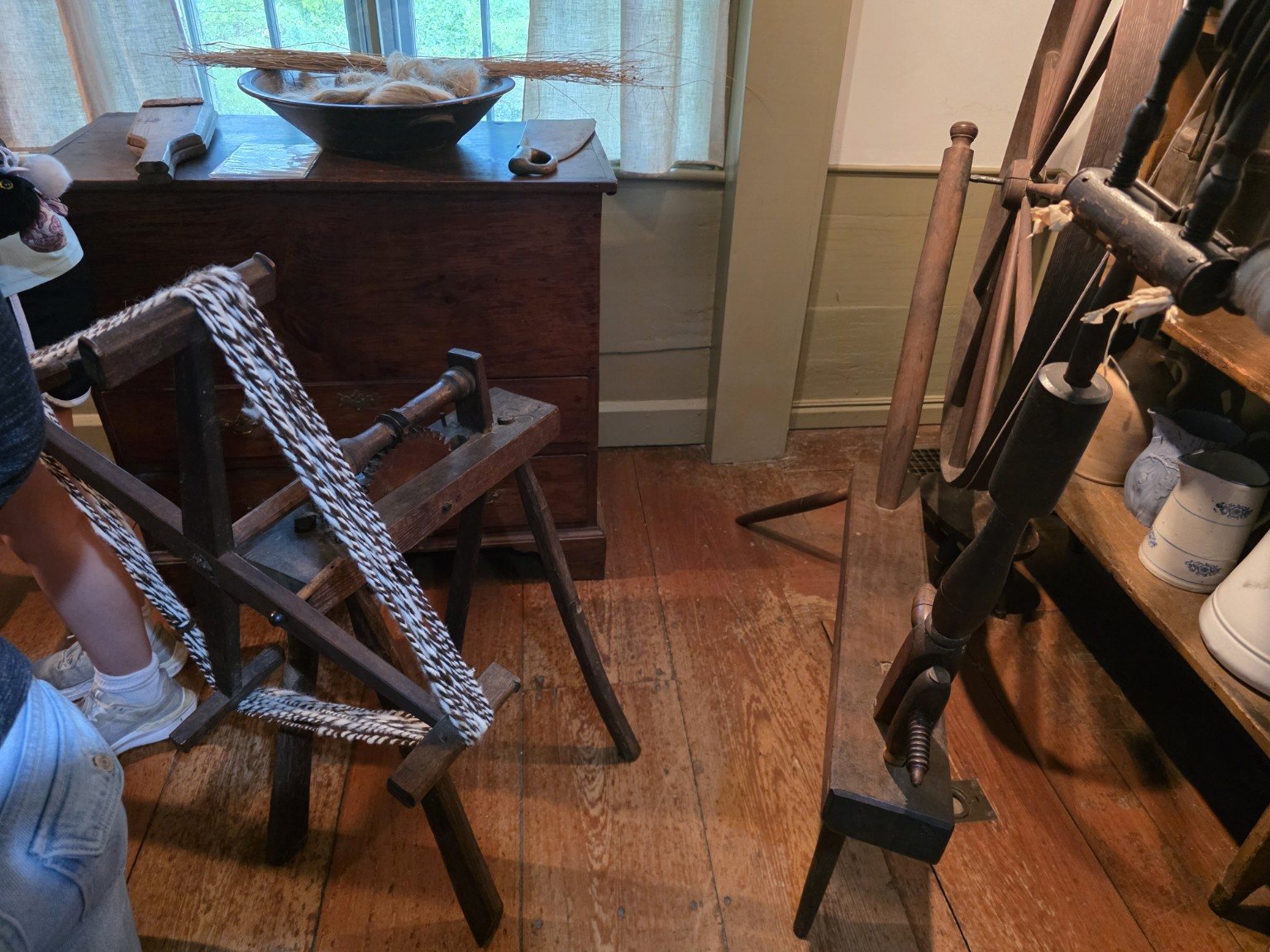
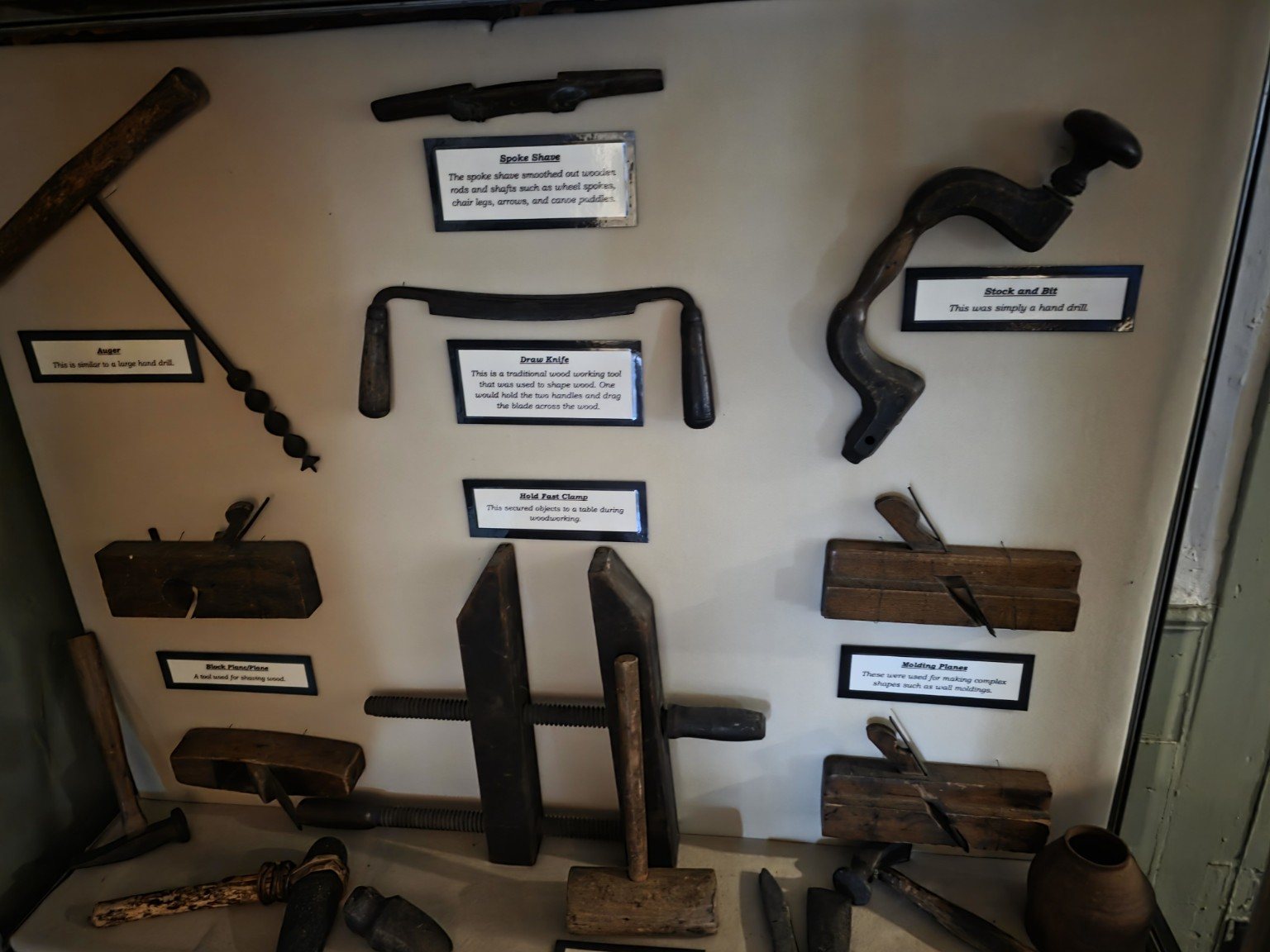
Spinning, fiber preparation, weaving, woodworking, and repair were not hobbies. They were the continuing work required to clothe a family and maintain a home. The equipment throughout the rooms makes that labor visible in a way a textbook never could.
Objects brought back from Rocky Nook
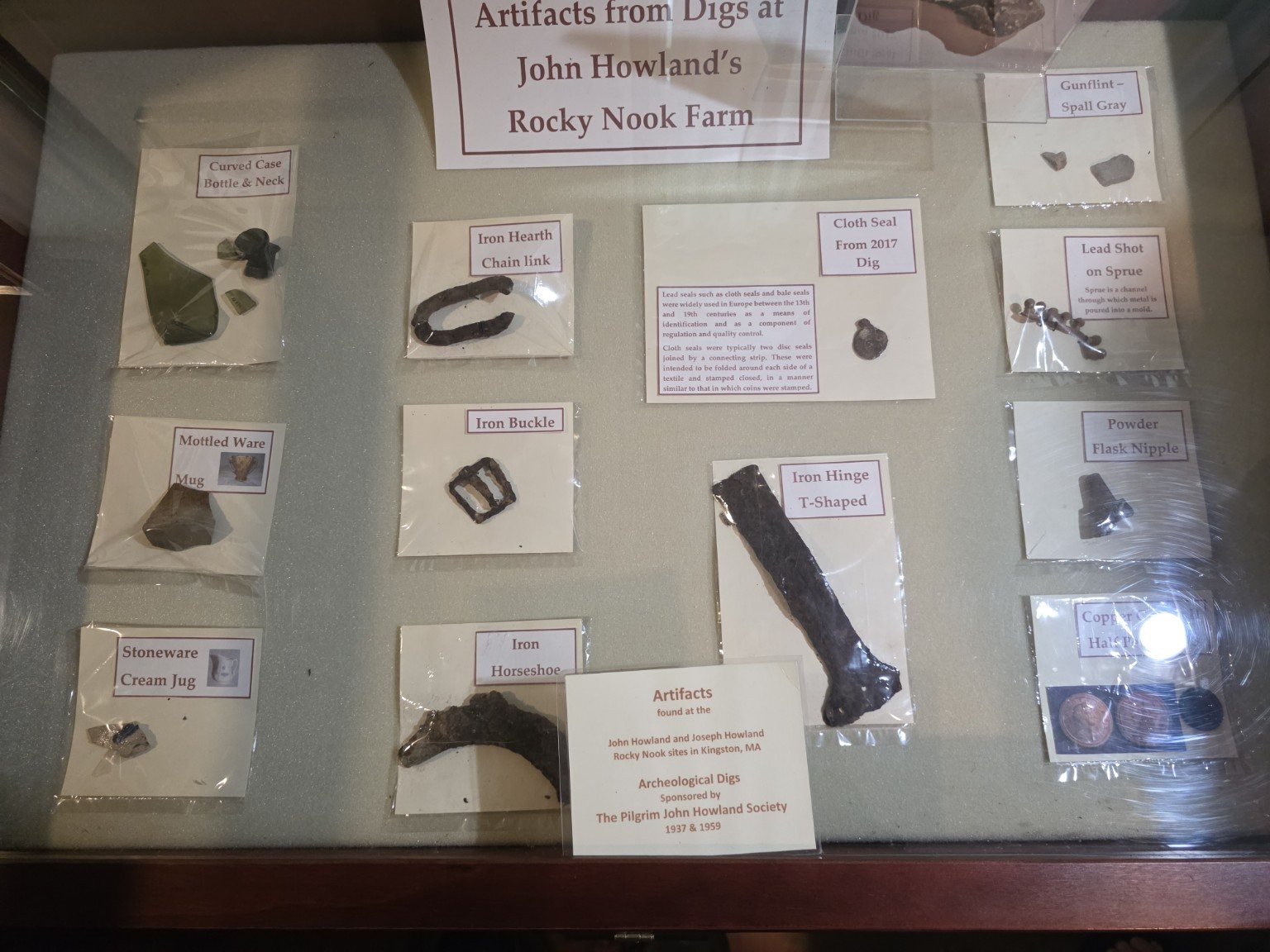
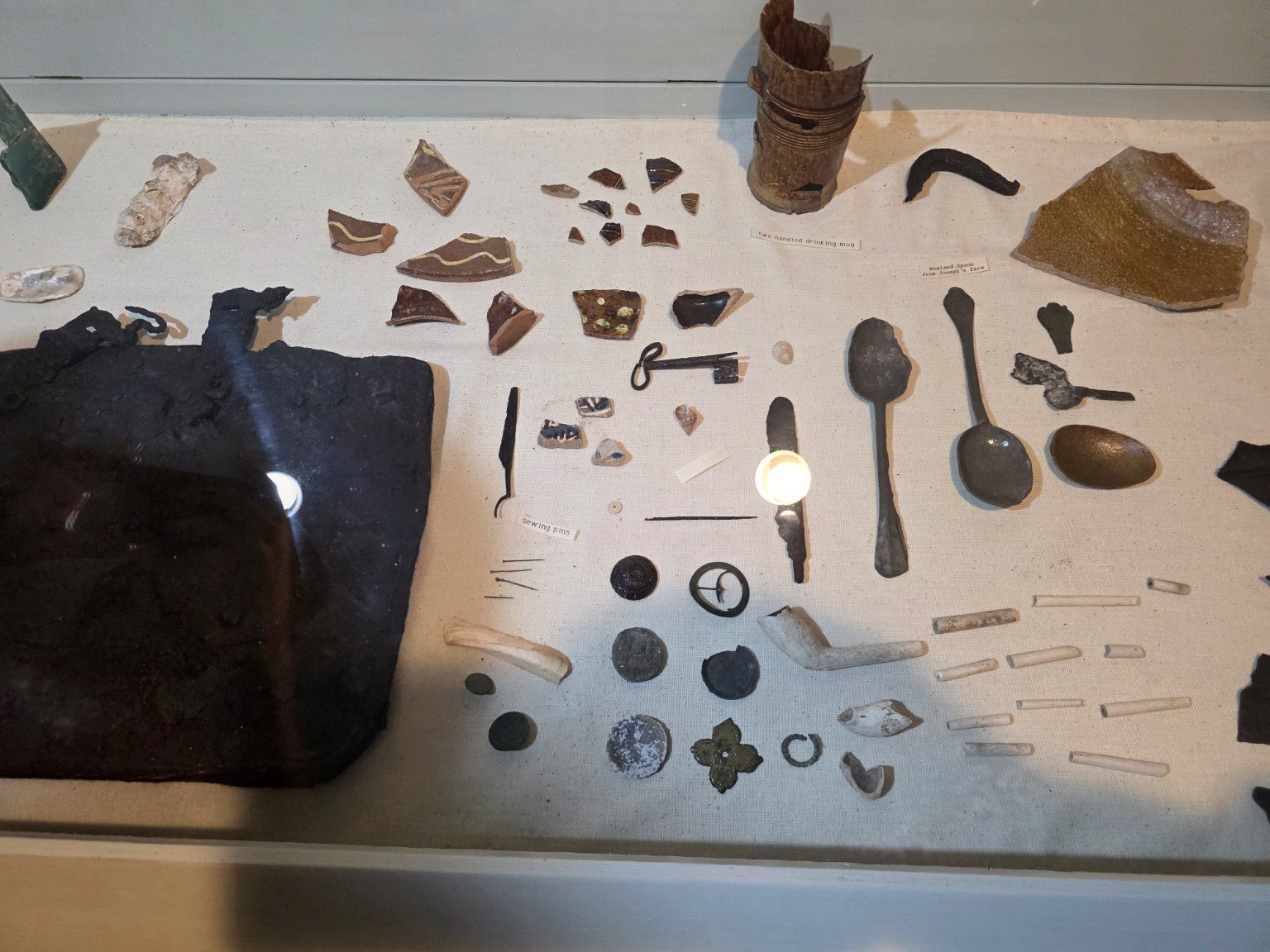
One of the most meaningful exhibits contains artifacts recovered during archaeological work at the John and Joseph Howland sites at Rocky Nook in Kingston. Small objects—a buckle, chain link, pottery fragments, glass, lead shot, a cloth seal, and pieces of iron hardware—are humble, but they carry the physical evidence of daily life.
These are not grand treasures. That is precisely why they matter. They are the things people handled, broke, repaired, lost, and left behind.
The family in ink and paper
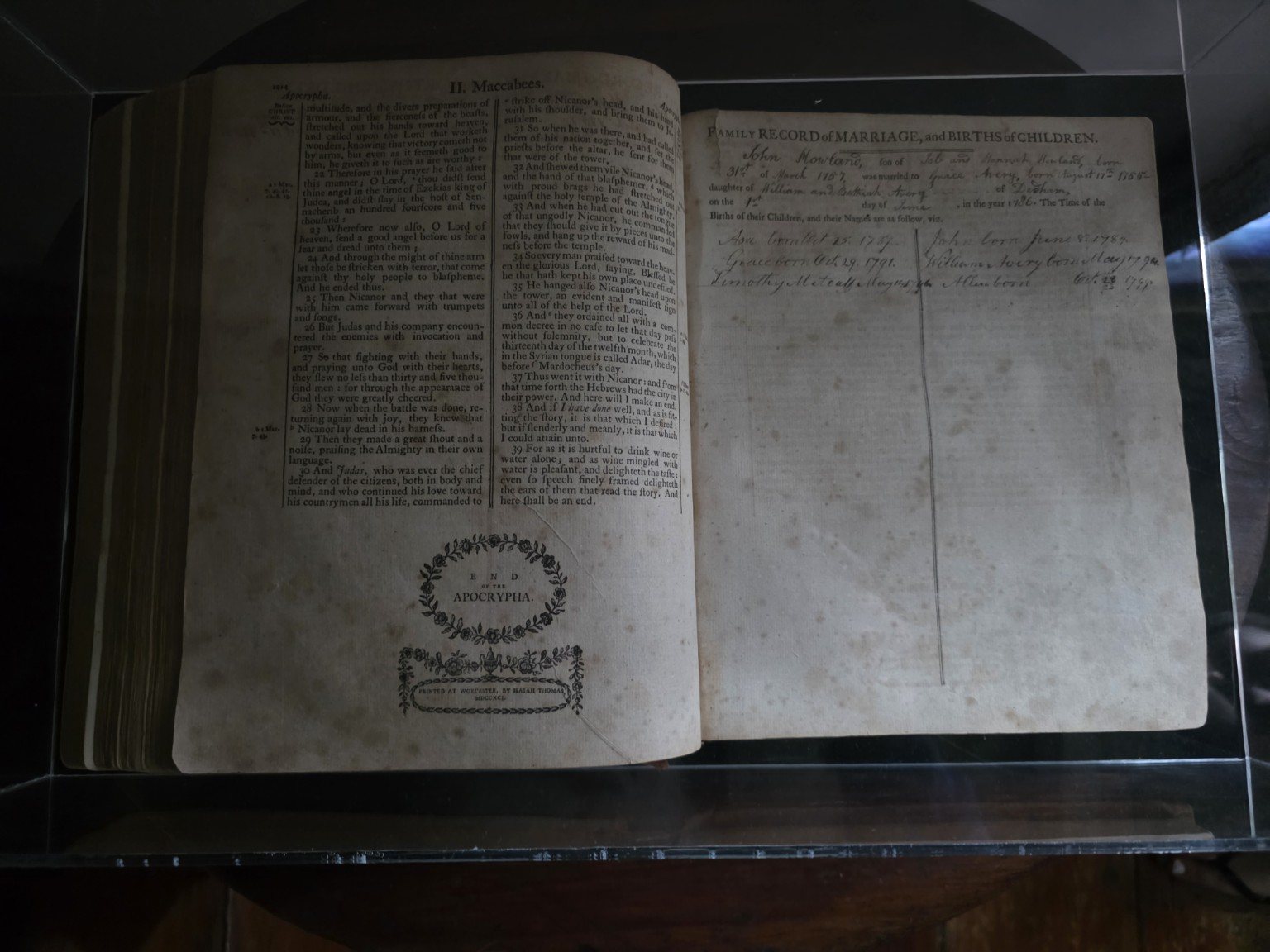
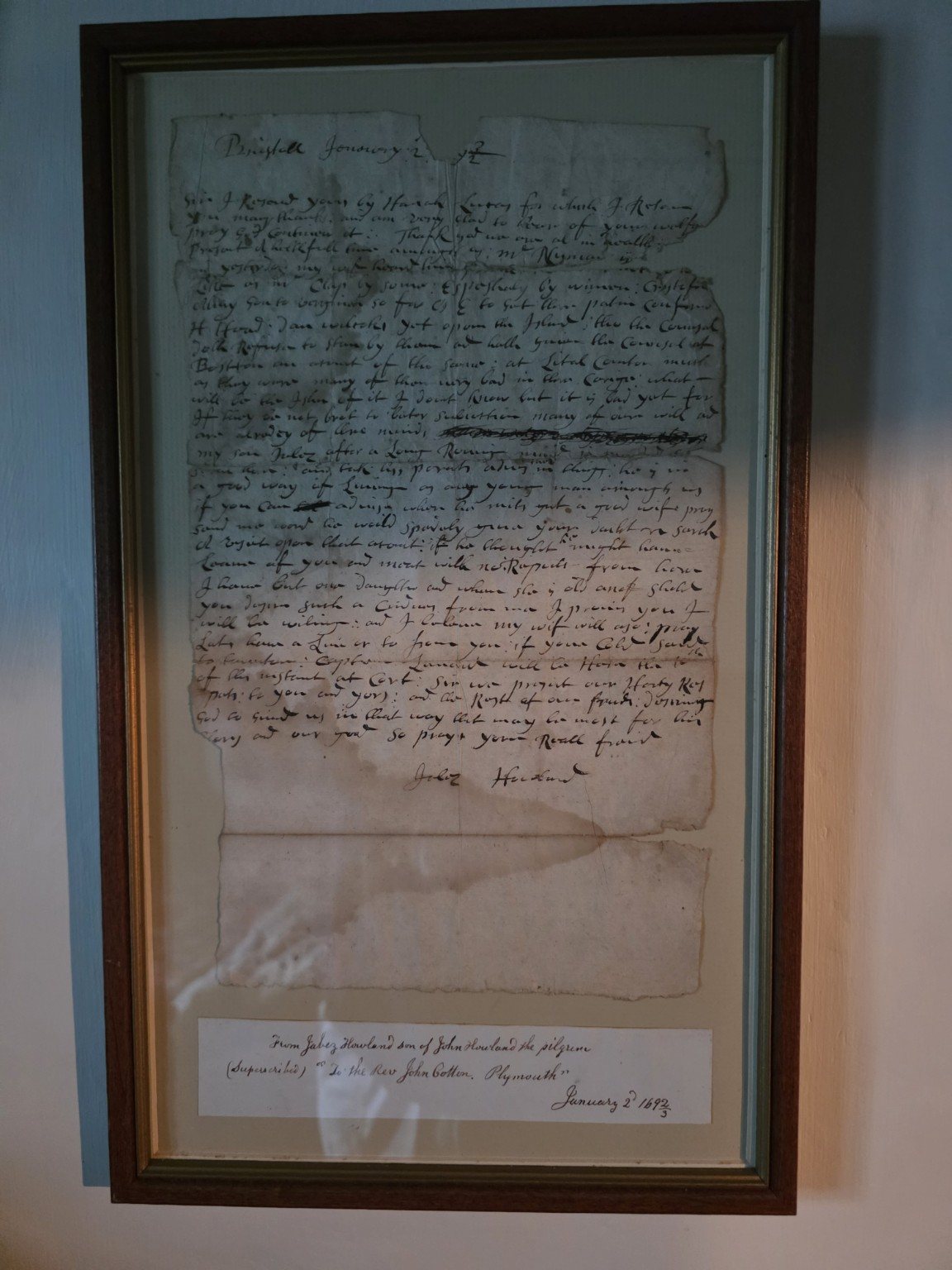
The most personal objects are the written ones. A family Bible records marriages and births in handwriting. Nearby, a letter from Jabez Howland—identified as the son of John Howland the Pilgrim—was written to the Reverend John Cotton in 1692/3. The ink has faded, but the connection has not.
A numerous posterity
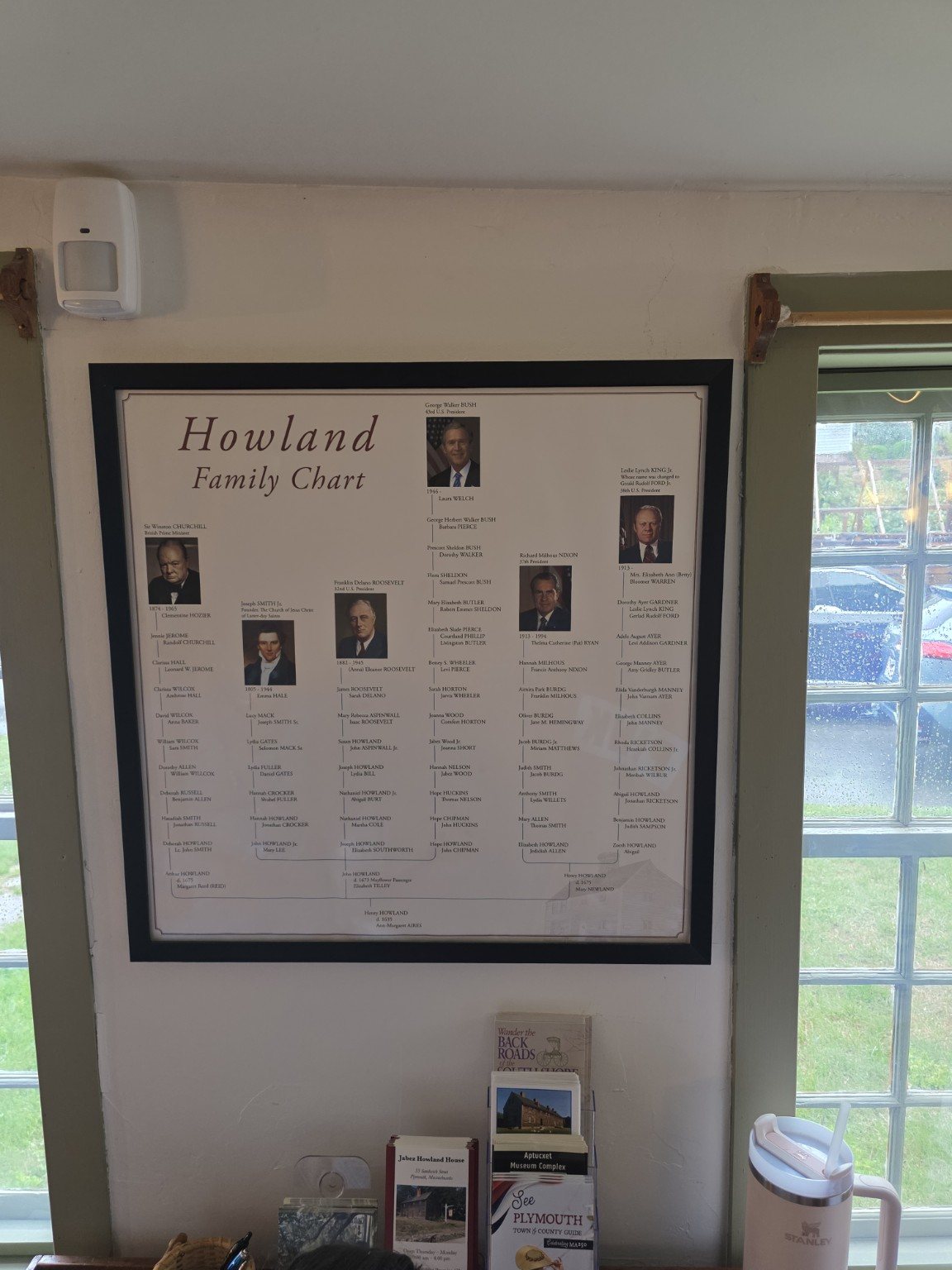
The large Howland family chart follows several branches across centuries and shows just how far the family spread. It echoes the words on John Howland’s Burial Hill memorial: from John and Elizabeth descended “a numerous posterity.” Our own branch is one small part of that continuing story.
Burial Hill gave us the Howland names carved in stone. The Jabez Howland House gave those names rooms, tools, handwriting, and a hearth.
One of the defining stops of the trip
The weather tried to slow the day down, but it may have made the visit even better. We stepped out of the rain and into a house where the family history felt close enough to touch. After seeing John Howland’s memorial on Burial Hill, walking through the Jabez Howland House completed another part of the pilgrimage.
Photographs by the Trail Tater crew during the Plymouth 2026 trip.
Return to Day SixVisit Burial Hill